
Next Day UK delivery on orders by 12pm (T&Cs apply)
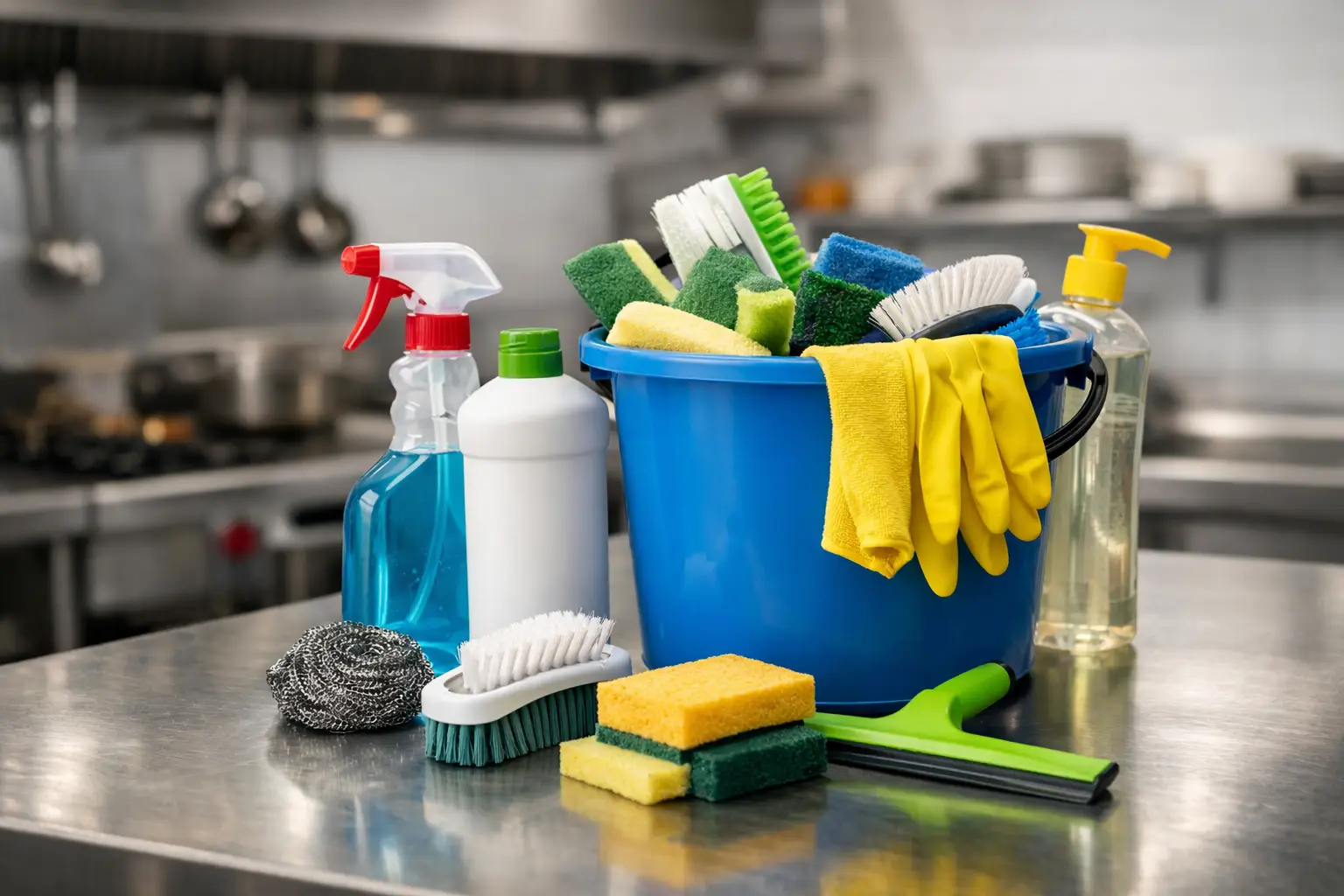
When a service runs flat out, the wrong cloths, chemicals or bins slow everything down. Cleaning supplies for food businesses are not an add-on purchase – they are part of daily operations, food safety, labour efficiency and presentation.
For cafés, takeaways, mobile caterers and fast food sites, the best buying approach is usually simple: stock the core products you use every day, match them to each work area, and avoid paying for specialist lines you do not need. A tidy product range keeps ordering easier, helps staff use the right item for the job, and reduces waste from overbuying.
Most food operators need cleaning products across four working zones: food prep, cooking, front of house and wash-up. Each zone has different risks. A prep bench needs food-safe surface cleaning and clear sanitising routines. A fryer area needs degreasers that can handle heavy residue. Customer-facing counters need quick wipe-down products that keep the area presentable during service. Wash-up areas need detergents, rinse support products and reliable waste handling.
That is why buying purely on unit price can cause problems. A cheaper product that needs more frequent application, creates delays or is unsuitable for the surface can end up costing more over time. Good purchasing is about fit for purpose as much as cost.
If you run a coffee shop, your routine is likely to centre on counters, tables, milk spillages, bin areas and washrooms. A takeaway or chicken shop may need stronger degreasing support, more floor cleaning and faster turnover of heavy-duty refuse sacks. Fish and chip shops often deal with oil, salt, food debris and high-volume waste, so cleaning products need to cope with both grease and pace.
The sensible way to buy is by task. Surface sanitisers, multipurpose cleaners, degreasers, washing-up liquids, floor cleaners, cloths, scourers, gloves and bin liners make up the core range for many sites. From there, you can add category-specific products depending on menu type and service level.
For food contact areas, you need products designed for regular use in commercial settings. Staff should be able to clean down prep tables, counters, fridge handles and small equipment quickly without confusion over where each product can be used. In busy kitchens, that matters. If a bottle is unclear or a process is too slow, people improvise.
Colour-coded cloths can help separate tasks and reduce cross-contamination risk. This is especially useful where space is tight and teams move quickly between stations. Even small sites benefit from a simple system that makes it obvious what belongs in prep, washroom or general cleaning use.
Burger sites, chicken shops, kebab houses and other high-output kitchens need proper grease control. Oil build-up on extractor surrounds, splash zones, tiled walls and floors is not just untidy – it creates safety and hygiene issues. A general cleaner may not be enough.
This is where stronger degreasing products earn their place. The trade-off is that these products may need more careful handling, storage and staff awareness. Buying a heavy-duty chemical for every task is unnecessary, but not having one where grease is constant will usually create more work.
Floors are easy to overlook until they become a hazard. In food businesses, wet patches, grease drips and dropped ingredients are part of the working day. You need floor cleaning products that suit your surface type and your service style.
A small café may manage with a straightforward mop-and-bucket routine plus a ready-to-use floor cleaner. A high-volume takeaway may need more frequent spot cleaning during service and a stronger end-of-day clean. Anti-slip performance matters, but so does drying time. If the floor stays wet for too long, it can disrupt the shift.
Even businesses with a high percentage of disposables still need dependable wash-up supplies. Reusable utensils, preparation tools, storage containers and back-of-house equipment all need regular cleaning. Washing-up liquid, dishwashing chemicals, scourers and brushes are not glamorous lines, but they are essential.
The key here is consistency. Running out of wash-up supplies creates immediate disruption. This is one reason many operators prefer to order cleaning lines alongside cups, containers, cutlery and other service essentials from one wholesale supplier. It cuts admin and helps keep repeat orders predictable.
Not every cleaning product comes in a bottle. Gloves, aprons, paper rolls,
centre feed wipers, refuse sacks and hand hygiene products all support a cleaner, safer workplace. These items are often used in higher volumes than expected because they sit across multiple tasks.
Refuse sacks are a good example. If sacks split, bins overflow or sizes are inconsistent, the whole back-of-house area suffers. The same goes for disposable gloves that tear too easily or paper roll that is poor value because staff use twice as much. In practice, low-cost products are only good value if they perform well enough for commercial use.
Waste moves quickly in
food service, especially at peak times. Strong bin liners reduce mess, speed up clearing and help staff keep prep and serving areas under control. Different stations may need different sizes, from small counter bins to heavier-duty sacks for kitchen waste.
It is worth matching sack strength to waste type. Lightweight liners may suit dry rubbish, but heavier food waste, bottles or soggy packaging need more support. Paying a little more for the right gauge can save time and reduce clean-up problems.
Reusable cloths can be economical, but only if they are managed properly. Disposable wipes may cost more per use, yet they can make sense in settings where speed and hygiene separation matter more than long-term reuse. There is no single right answer. It depends on your workflow, team discipline and storage space.
For many operators, a mix works best: reusable cloths for general cleaning and disposable wiping products for higher-risk or high-turnover tasks. That balance keeps spend under control without making standards harder to maintain.
over complicating
The easiest way to control spend is to standardise what you can. Too many overlapping products create confusion, increase storage needs and make reordering less efficient. Most sites do better with a tight range of dependable core lines than a cupboard full of niche products.
Start by checking what is actually used each week. If a product sits untouched for months, it may not need replacing. If teams regularly substitute one product for another, your range may be too complicated or not practical enough. The goal is not to buy the biggest range. It is to buy the right one.
Pack size matters as well. Bulk buying can reduce unit cost, but only if you have the storage and usage to justify it. Smaller sites often waste money on oversized packs that tie up cash and clutter limited stock rooms. Larger operators or multi-site groups may benefit from bigger volumes and more consistent reorder cycles.
Cleaning supplies are rarely the only thing you are buying. Most food businesses need cups, lids, takeaway containers, bags, napkins, cutlery and wraps at the same time. Splitting these categories across several suppliers can work, but it usually means more admin, more delivery coordination and more chances of stock gaps.
That is why many commercial buyers prefer a broader wholesale partner. Ordering cleaning products alongside packaging and everyday consumables can simplify purchasing and make routine replenishment faster. For operators already managing margins, staffing and service speed, fewer moving parts is a real benefit.
Grab & Go Packaging Ltd supports this kind of practical buying by offering cleaning lines alongside the wider essentials food businesses order every week.
A frequent mistake is buying for compliance on paper but not for actual service conditions. A product may look suitable in a quiet environment and fail completely in a busy takeaway kitchen. Another is leaving product choice entirely to ad hoc buying based on what seems cheapest that week.
There is also the issue of training. Even good cleaning supplies for food businesses will
under perform if staff are unclear on use, dilution or where products belong. Simple labelling, sensible storage and a straightforward product range usually solve more problems than adding another specialist line.
A single-site sandwich bar will not need the same cleaning setup as a multi-station fried food outlet. That sounds obvious, but it is where many buying decisions go wrong. Product choice should reflect menu, footfall, opening hours, service pressure and back-of-house space.
If your operation is compact, fast-moving and short on storage, convenience and simplicity matter more. If your kitchen produces heavy grease and large waste volumes, durability matters more. If you manage several locations, standardisation matters more because it helps with training, ordering and consistency.
The best cleaning setup is usually the one your team can use properly every day without slowing service or creating unnecessary cost. Get that right, and hygiene stops being a scramble at the end of the shift and becomes part of how the business runs from open to close.