
Next Day UK delivery on orders by 12pm (T&Cs apply)
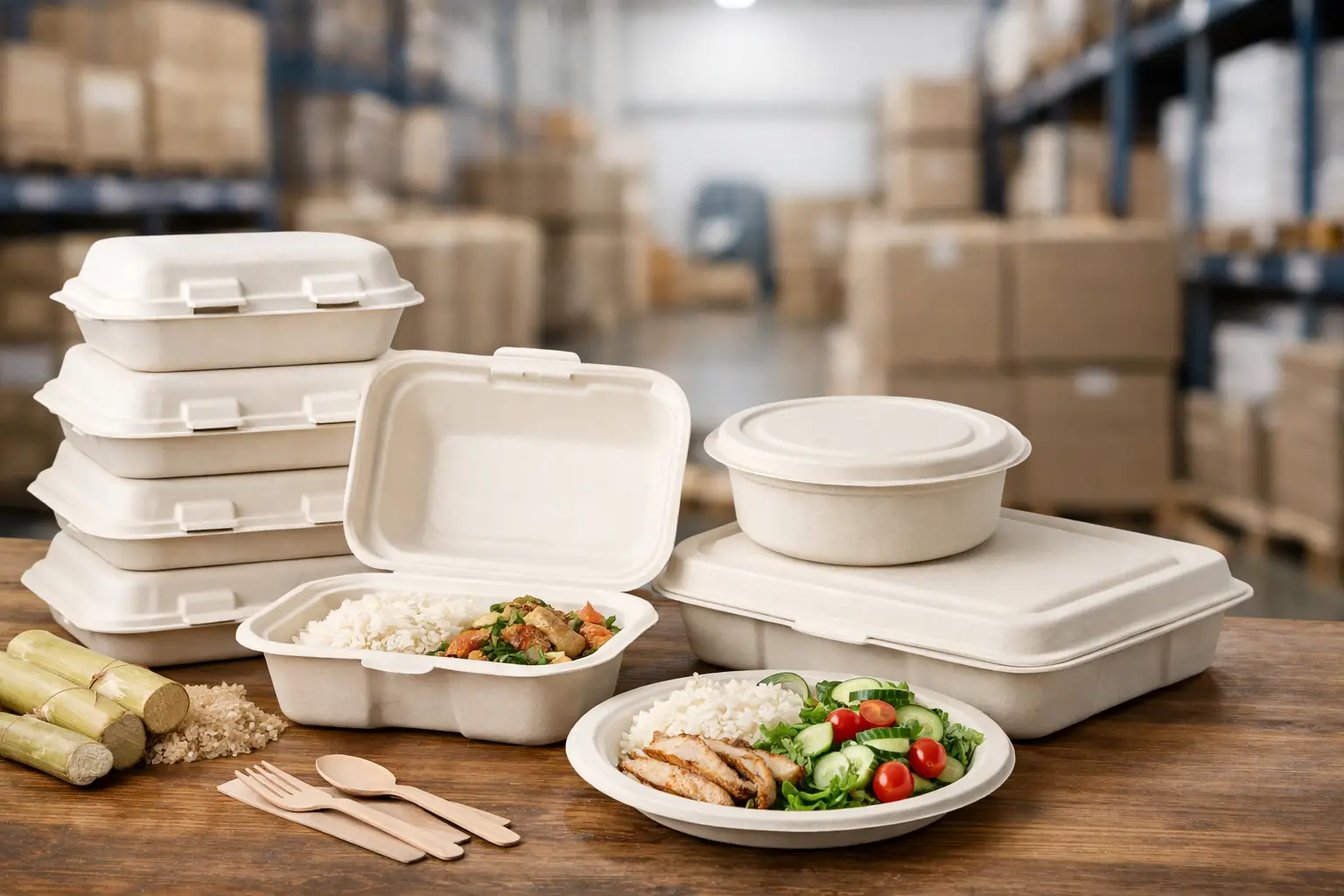
When a busy lunch service starts backing up, the wrong container quickly becomes a costly problem. Leaks, soft bases, poor stacking and mismatched lids all slow the line. That is why buying bagasse food containers wholesale is not just about finding a lower unit price. It is about choosing stock that works in real service, holds food properly and makes repeat ordering simpler.
Bagasse containers are a practical option for many takeaway and
food-service businesses. They suit operators who need sturdy food packaging for hot or cold dishes, while also keeping presentation clean and professional. For cafés, fast-casual counters, caterers and delivery kitchens, the appeal is straightforward – reliable performance, tidy appearance and bulk pack formats that support daily volume.
Bagasse is made from sugarcane fibre, which gives these containers a firm, moulded feel compared with thinner paper-based options. In service, that usually translates into better structure, a more premium hand feel and improved resistance for many common menu items.
They are often a good fit for loaded salads, rice boxes, pasta, grilled items, bakery products and takeaway mains that need a rigid base. They also stack well in many prep and dispatch settings, which matters when staff are working quickly and storage space is tight.
That said, performance still depends on the specific format. A clamshell used for burgers has a different job from a rectangular meal box used for hot food delivery. If your menu includes particularly oily dishes, very wet sauces or extended delivery times, product choice needs closer attention. One material does not solve every packaging issue on its own.
Wholesale buying works best when it reflects how your kitchen actually operates. A lower case price can look attractive, but if the pack size is awkward, the lid fit is inconsistent or the container is unsuitable for your menu, the savings disappear quickly.
The more useful way to buy bagasse food containers wholesale is to review them against four practical questions. First, what food is going inside? Second, how long does it stay in the pack? Third, is it being carried, shelved or delivered? Fourth, how many formats do you really need?
Many operators carry too many similar container lines. That ties up cash and takes up shelf space. In many cases, it is better to standardise around a smaller number of dependable sizes that cover your core menu. This makes ordering easier, reduces picking errors and helps staff work faster during peak periods.
A shallow hinged box may suit cakes, traybakes or lighter lunches, while a deeper container is more practical for hot meals and larger portions. Compartment formats can help with food separation, but they only make sense if that separation improves the customer experience. If sauces still migrate or chips steam too heavily, the extra format may not earn its shelf space.
Rectangular meal boxes are often the most versatile for mixed menus. Clamshells tend to suit grab-and-go and takeaway counters where speed matters. Bowl-style formats work well when presentation is important, especially for fresh deli-style food.
Container choice is only half the job. If a line needs separate lids, they need to be easy to identify, quick to fit and stable in transit. A supplier with clear category organisation and dependable stock depth can save time here, especially if you are ordering across cups, bags, boxes and cleaning lines at the same time.
Wholesale case quantities support better pricing, but only if they fit your back-of-house setup. Overbuying awkward stock creates damage, clutter and waste. For single-site independents, a slightly higher frequency of ordering may be more efficient than taking too much volume at once. Multi-site groups may benefit from larger consolidated buys, especially where stock lines are standardised.
Sturdiness is the first thing most buyers notice, but it should not be the only one. Rim strength, closing mechanism, stackability and resistance to moisture all affect day-to-day use. If staff have to double-pack meals or apply extra tape to keep boxes shut, that product is costing more than it should.
Heat retention is another trade-off. Some foods benefit from a closed, insulated pack. Others suffer from trapped steam and lose texture by the time they reach the customer. Fried foods are a good example. A strong container may still not be the right container if it affects crispness.
Portion control matters too. Containers that are too large can make servings look underfilled, while undersized packs damage presentation and create closing problems. A proper fit improves both food appearance and packing speed.
Bagasse containers make sense for a wide range of food operators, but the value is strongest where packaging needs to do more than simply hold the food.
Cafés use them for lunch deals, cake slices and salad portions where appearance matters. Takeaways and fast-food outlets often use them for burger meals, chicken, rice and hot sides. Caterers value them for events and buffets because they offer a clean, consistent presentation in larger quantities. Delivery-focused kitchens often choose them for menu lines that need a stronger base and a more premium feel than lighter alternatives.
If your business runs multiple packaging categories, there is also a purchasing advantage in sourcing from one supplier. Ordering containers alongside coffee cups, deli bowls,
grease-proof paper, carrier bags and cleaning supplies reduces admin and can improve stock control. For operators trying to streamline procurement, that one-stop model is often more useful than chasing marginal savings across separate vendors.
A good wholesale supplier should make buying easier, not more complicated. Range depth matters because most businesses need more than one container style. If you are also buying lids, cups, boxes and front-of-house consumables, it helps to keep purchasing in one place.
Stock reliability is just as important as product choice. A container that works well is only useful if you can reorder it consistently. Service also matters in practical ways – clear pack information, easy online ordering, sensible category structure and product options that suit different food sectors.
For businesses that want a more joined-up packaging offer, bespoke options can add value as well. While bagasse food containers themselves may not always be the main printed item, branded
grease-proof paper or personalised cups can lift the overall customer presentation around the meal. That matters for growing takeaway brands and cafés trying to look consistent across every order.
For trade buyers in the UK, it is also worth checking whether the supplier understands your sector. A fish and chip shop, a coffee shop and a fast-casual lunch site all need different packaging mixes. The right wholesale partner should reflect that in the product range rather than offering a generic one-size-fits-all selection.
One of the most common mistakes is assuming all bagasse lines perform the same way. They do not. Thickness, closure style and shape all change how the pack behaves.
Another is choosing purely on eco positioning without checking operational fit. If the container does not suit your food, your service suffers. Practicality comes first. The best result is packaging that supports both everyday use and customer expectations.
A third mistake is buying too many niche formats too early. Start with the lines that cover your highest-volume items. Then add specialist formats only where there is a clear need.
Most businesses do not need dozens of food container types. They need a tight range that covers core dishes, travels well and reorders easily. A sensible wholesale setup might include one hinged clamshell, one larger meal box, one deli or salad format and compatible lids where needed. That gives enough flexibility without
over complicating stock.
If you are reviewing suppliers, look at the wider ordering picture. A trade-focused site such as Grab & Go Packaging Ltd can be useful when you want to source bagasse alongside cups, boxes, bags and other everyday packaging lines without spreading orders across multiple accounts.
The right container should make service easier from prep bench to customer handoff. If your current range slows the line, causes leaks or creates unnecessary stock headaches, that is usually the best time to tighten the range and buy with more purpose.