
Next Day UK delivery on orders by 12pm (T&Cs apply)
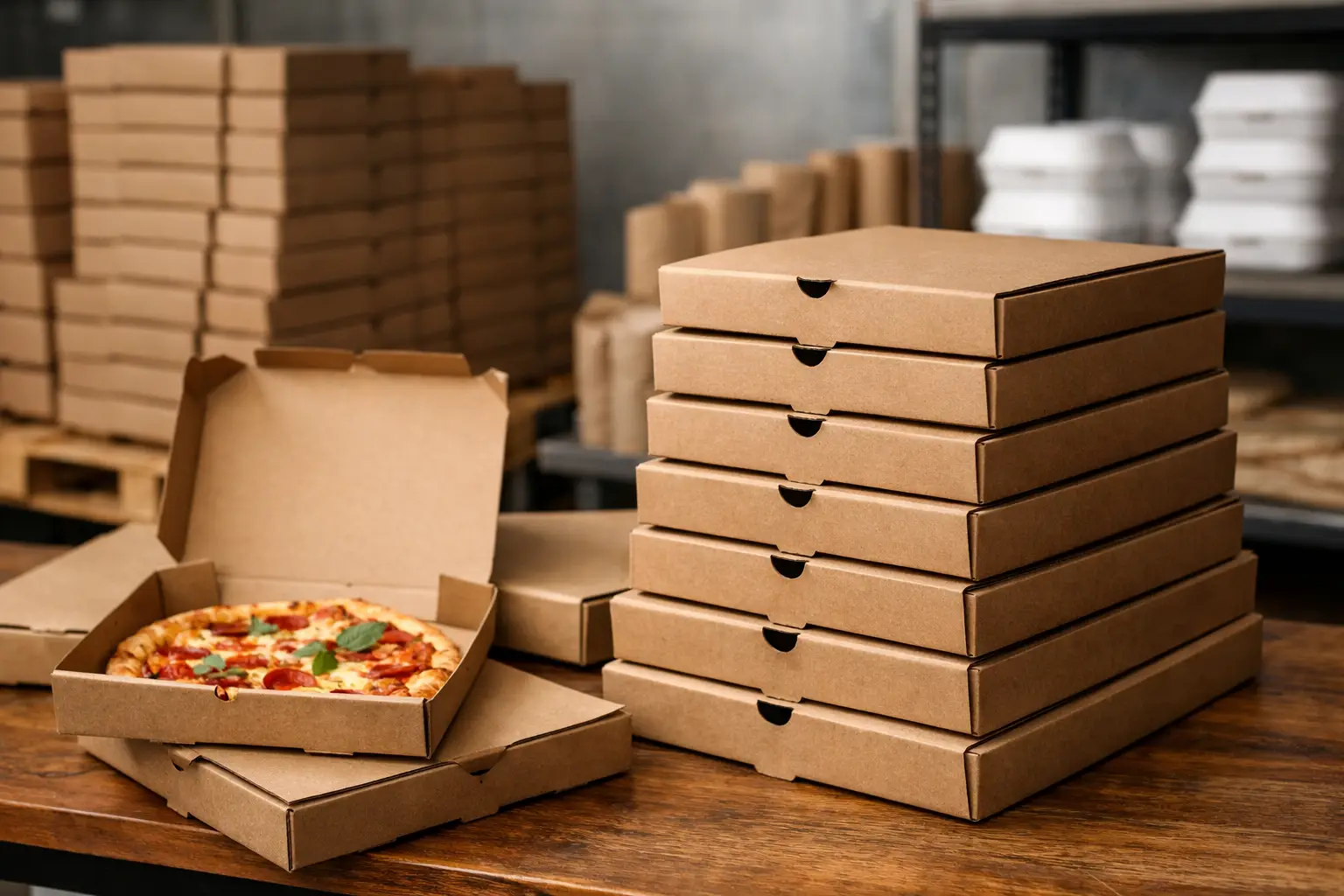
A Friday night rush exposes weak packaging fast. If your boxes lose heat, buckle under grease or arrive crushed in transit, the customer notices before they even taste the pizza. That is why buying pizza boxes wholesale is not just about unit price. It is about choosing stock that protects product quality, supports service speed and keeps your operation consistent when volumes climb.
For independent takeaways and growing multi-site operators alike, pizza boxes sit in that awkward category of everyday essentials that can still cause real problems when they are wrong. The size has to fit the product properly, the board has to hold its shape, and the supply has to be reliable enough that you are not scrambling for replacement stock on a busy weekend. Wholesale purchasing makes sense, but only when the boxes match how you actually trade.
A pizza box has a simple job, but in practice it needs to do several things at once. It must retain heat without trapping so much steam that the crust softens too quickly. It needs enough rigidity to stack during busy service, especially if your delivery team is carrying multiple orders at once. It also has to present the food well on collection and delivery, because packaging is part of the handover.
This is where trade buyers often need to look past the lowest headline cost. A cheaper box can work perfectly well for collection-only trade with short hold times. The same box may be a poor fit for high-volume delivery where pizzas spend longer in transit and face more handling. The right wholesale choice depends on your menu, your service model and how often orders leave the premises stacked with sides, dips and drinks.
If you run a mixed menu, consistency matters as much as specification. Using one supplier for pizza boxes alongside burger boxes, deli bowls, carrier bags, napkins and cleaning supplies simplifies ordering and reduces time spent chasing multiple vendors. For busy food businesses, that convenience has real value.
Size is the first practical decision, and it is one of the easiest to get wrong. A box that is too large allows the pizza to move during transport, which affects presentation and can cause toppings to shift. A box that is too tight can crush the crust edge and make loading awkward during service.
Most operators buy around standard menu sizes, but it is worth checking the actual finished size of your pizzas rather than the listed menu description alone. A 12-inch pizza does not always need the same internal fit from one style to another, especially if you offer deep pan, stuffed crust or heavily topped products. A snug, practical fit usually performs better than simply defaulting to the next size up.
It also helps to think in terms of your full order flow. If family deals, meal bundles or large orders are a regular part of your business, your pizza packaging needs to stack cleanly with sides and extras. That can influence whether you keep a tight range of core box sizes or carry more than one format to suit different order values.
Board quality affects more than appearance. It determines how well the box holds its shape, how it performs under heat and grease, and how it handles stacking. For high-output takeaways, stronger board can reduce complaints tied to crushed lids or weakened corners, particularly during peak delivery periods.
That does not mean every shop needs the heaviest board available. If your pizzas are lighter, your collection radius is small and orders move quickly, a standard board may be perfectly adequate. The trade-off is straightforward: heavier-duty boxes usually cost more, but they often repay that through fewer service issues and a better customer handover.
Ventilation is another practical point. Poor airflow can leave pizzas sweating in the box. Too much ventilation can affect heat retention. The right balance depends on how long orders are typically held before collection or delivery. There is no single answer that suits every menu.
For some operators, plain stock is the most efficient option. It keeps purchasing simple, works across multiple menu formats and is often the easiest route for straightforward bulk ordering. If your focus is speed, availability and margin control, plain boxes can be the right call.
Printed boxes make more sense when presentation and brand recognition are part of the sales strategy. A branded pizza box can strengthen the look of your takeaway operation and make delivery orders feel more polished. This matters more than many buyers expect, especially for businesses competing in crowded local markets where repeat custom depends on being remembered.
The decision usually comes down to volume, budget and brand goals. If you trade at sufficient volume, bespoke print can be a practical investment rather than a vanity extra. It gives you packaging that works harder for the business without changing the product itself. For operators building a stronger visual identity across coffee cups,
grease-proof paper, bags and takeaway boxes, printed pizza boxes fit naturally into that wider packaging approach.
Wholesale buying only works well if the stock is manageable on site. Pizza boxes can take up more room than buyers expect, particularly when ordering multiple sizes. Before increasing order volume for a better unit cost, check your available storage and how quickly stock turns over.
This is where sensible pack sizing matters. Buying too little means repeat ordering and the risk of running short at the wrong time. Buying too much can create storage pressure in already busy prep and back-of-house areas. The right order quantity is usually tied to your busiest trading pattern, not your quietest week.
For many takeaways, a practical approach is to hold enough stock to cover peak periods with a margin for delayed replenishment, while avoiding overbuying slower-moving sizes. If one box size accounts for most orders, that should lead your purchasing plan. Less common sizes can stay leaner if they are not central to your menu.
Pizza packaging is judged at the door. Customers may not comment on a box that works properly, but they will notice one that arrives greasy, sagging or misshapen. In delivery-led businesses, the packaging is part of product quality because it affects temperature, appearance and ease of handling.
The ideal box for delivery is not always the same as the ideal box for collection. Delivery often means more movement, more stacking and longer hold times. If a large share of your trade is app-based or driver-based, that should influence your wholesale buying choice. Paying slightly more for stronger, more stable boxes can be the more economical decision when it helps reduce remakes, refunds or poor reviews.
It is also worth thinking about the rest of the order. Dips, chicken sides, garlic bread, desserts and bottled drinks all add handling complexity. If your pizza box does not stack cleanly with the rest of your packaging, service slows down and delivery bags become harder to organise.
There is a practical advantage in sourcing pizza boxes from a supplier that already serves takeaway and hospitality operators across multiple packaging categories. It simplifies procurement, helps maintain consistency across stock lines and makes repeat ordering easier for busy teams.
For many buyers, the real benefit is not just product choice but operational convenience. Ordering pizza boxes alongside cups, lids, containers, cutlery, carrier bags and cleaning essentials saves time and reduces admin. It also makes it easier to keep a consistent standard across the full customer journey, from front counter to delivery handover.
That one-stop approach is especially useful for growing businesses. As menus expand and sites multiply, packaging decisions get more complex. A supplier with both standard stock and bespoke options can support that growth without forcing you to rebuild your buying process each time your needs change. Businesses looking to streamline routine ordering can browse product categories at Grab & Go Packaging Ltd as part of a broader wholesale supply plan.
The cheapest pizza box is not always the lowest-cost option over time. Value comes from a mix of unit price, product performance, reliable availability and how well the packaging fits your service model. If a box saves pennies but causes damage, poor presentation or delivery complaints, the real cost is higher.
A better buying decision usually comes from asking practical questions. Does the box suit your most common pizza sizes? Can it handle your busiest delivery periods? Is the pack quantity sensible for your storage space? Does plain stock do the job, or would printed packaging strengthen your brand presentation? Those answers matter more than chasing the lowest line on a price list.
Good wholesale purchasing is rarely complicated. It is about buying packaging that works hard, arrives on time and supports service without creating extra problems in the kitchen or at the door. Get that right, and your pizza boxes become what they should be – dependable stock that keeps orders moving and your business looking sharp.