
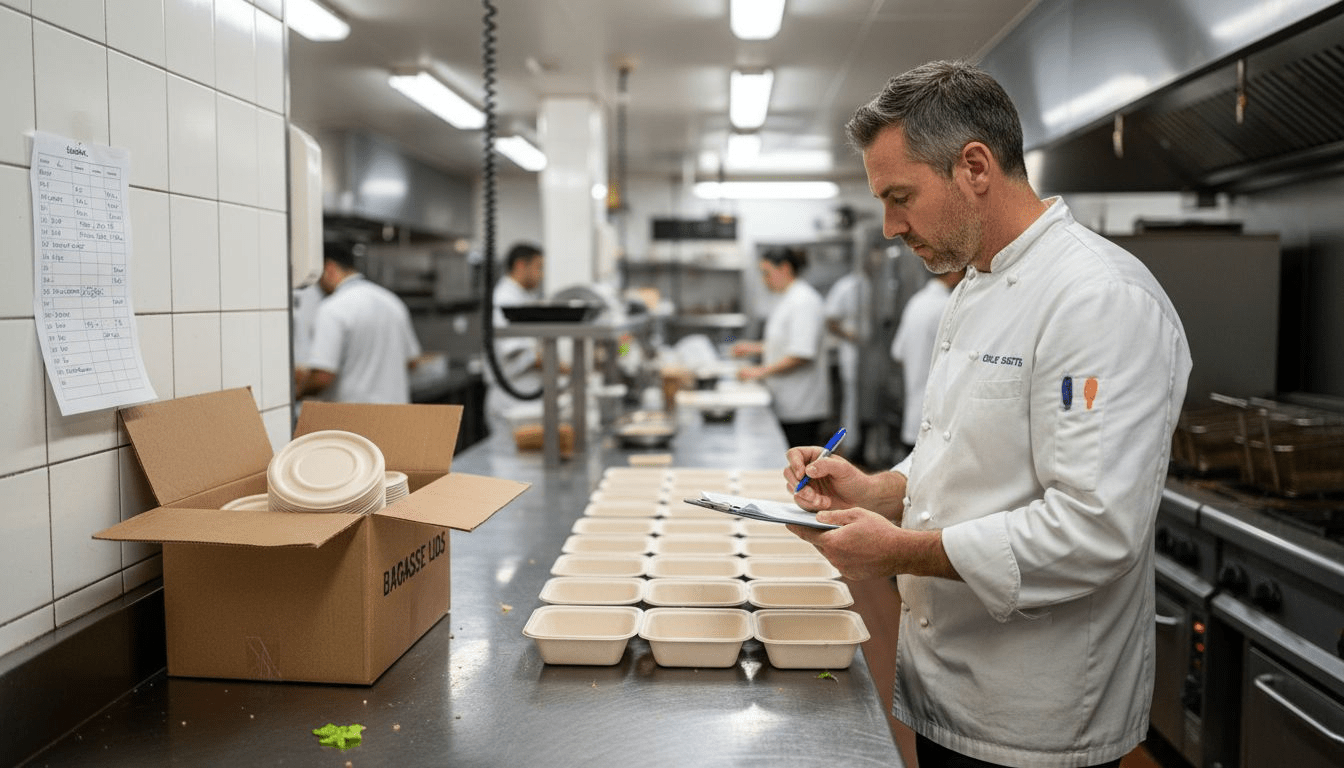
Choosing the right packaging solution can feel overwhelming for cafés and restaurants that want to stand out while cutting waste. With growing consumer demand for eco-friendly materials, finding an alternative to traditional plastics is more important than ever. Bagasse packaging, made from renewable sugarcane waste, offers a responsible way to reduce environmental impact and meet food safety standards without sacrificing style or function.
| Key Message | Explanation |
|---|---|
| 1. Assess Packaging Requirements | Evaluate food service volume and dish types to define suitable bagasse packaging. Understand temperature needs and delivery methods for optimal selection. |
| 2. Select Appropriate Bagasse Packaging | Choose container size and durability based on menu items and service style, ensuring compliance with food safety regulations. |
| 3. Prepare Staff and Workspace | Train staff in handling and hygiene protocols while setting up designated storage areas for effective transition to sustainable packaging. |
| 4. Implement Safe Handling Practices | Maintain temperature control and prevent contamination, whilst ensuring packaging meets safety standards for a high-quality presentation. |
| 5. Verify Sustainability and Customer Satisfaction | Evaluate environmental impact and gather customer feedback to assess bagasse packaging performance, ensuring continuous improvement in sustainability efforts. |
Assessing your food packaging requirements is a critical first step in transitioning to sustainable bagasse packaging. This process helps you identify the most suitable eco-friendly solutions for your specific serving needs.
To effectively evaluate your packaging needs, consider these key factors:
Bagasse packaging offers remarkable sustainability benefits. Renewable sugarcane waste material provides an excellent alternative to traditional plastic containers, addressing environmental concerns while maintaining functional performance.
Bagasse packaging represents a responsible choice for businesses committed to reducing their ecological footprint.
When assessing your needs, examine your current packaging inventory and waste generation. Look for opportunities to streamline your packaging approach while maintaining food quality and presentation standards.
Here is a quick-reference guide on how bagasse packaging addresses both operational needs and environmental goals:
| Need Addressed | Operational Benefit | Environmental Impact |
|---|---|---|
| Heat resistance | Maintains integrity with hot foods | Reduces need for plastic or styrofoam |
| Suitability for dishes | Custom designs suit diverse menus | Minimises unnecessary material usage |
| Storage efficiency | Stackable and easy to organise | Decreases storage of non-biodegradable waste |
| Streamlined inventory | Eases tracking and stock rotation | Lowers overall packaging waste |
Top tip: Conduct a comprehensive audit of your current packaging usage to identify precise transition opportunities and potential cost savings.
Selecting the right bagasse packaging requires careful consideration of your specific food service requirements while maintaining sustainability standards. Understanding how to match your packaging to your business needs will help you make an informed and environmentally responsible choice.
When choosing bagasse packaging, evaluate these critical selection criteria:
Business owners must also consider food packaging safety regulations to ensure compliance with UK legal standards. Bagasse containers must meet specific food contact material requirements and maintain appropriate labelling protocols.
Sustainable packaging is not just an environmental choice – it’s a strategic business decision that reflects your brand’s commitment to responsible practices.
Bagasse packaging offers remarkable versatility across different food service scenarios. By carefully assessing your specific operational needs, you can select packaging that balances ecological responsibility with practical functionality.
Top tip: Request samples from different bagasse packaging suppliers to test performance and compatibility with your specific food service requirements before making a bulk purchase.
Transitioning to bagasse packaging requires thoughtful preparation of both your physical workspace and team members. Creating a smooth implementation process involves comprehensive training and strategic organisational adjustments to ensure successful adoption of these sustainable packaging solutions.
Key preparation steps include:
Professional organisations recommend comprehensive packaging training to ensure staff understand the unique characteristics of bagasse materials. This training should cover material properties, environmental benefits, and proper handling techniques.
Effective staff preparation transforms sustainable packaging from a challenge into a strategic business advantage.
Understanding the nuanced requirements of bagasse packaging will help your team integrate these materials seamlessly into daily operations. Proper preparation minimises potential disruptions and maximises the environmental and operational benefits of your new packaging approach.
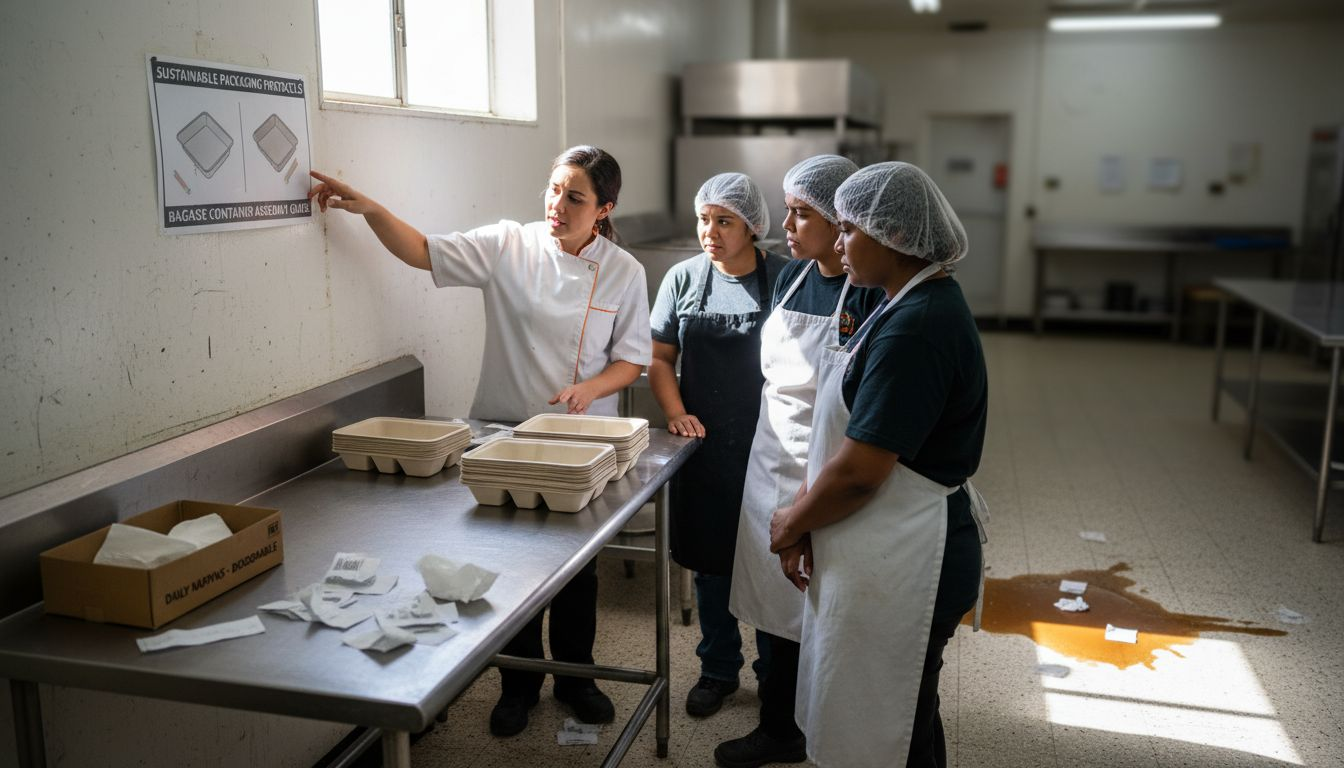
Top tip: Create visual reference guides and conduct hands-on training sessions to help staff become comfortable with bagasse packaging characteristics and handling procedures.
Implementing safe handling and presentation of bagasse packaging requires meticulous attention to food safety protocols and aesthetic considerations. Your goal is to ensure both the functional integrity of the packaging and an appealing visual presentation that reflects your commitment to sustainability.
Key implementation strategies include:
Food packaging safety guidelines emphasise maintaining the delicate balance between environmental innovation and consumer health protection. This involves carefully managing packaging materials to prevent potential contamination risks.
Sustainable packaging is not merely an environmental statement – it’s a comprehensive approach to responsible food service.
By integrating careful handling techniques with thoughtful presentation, you can transform bagasse packaging from a simple container into a powerful statement about your business’s commitment to quality and environmental stewardship.
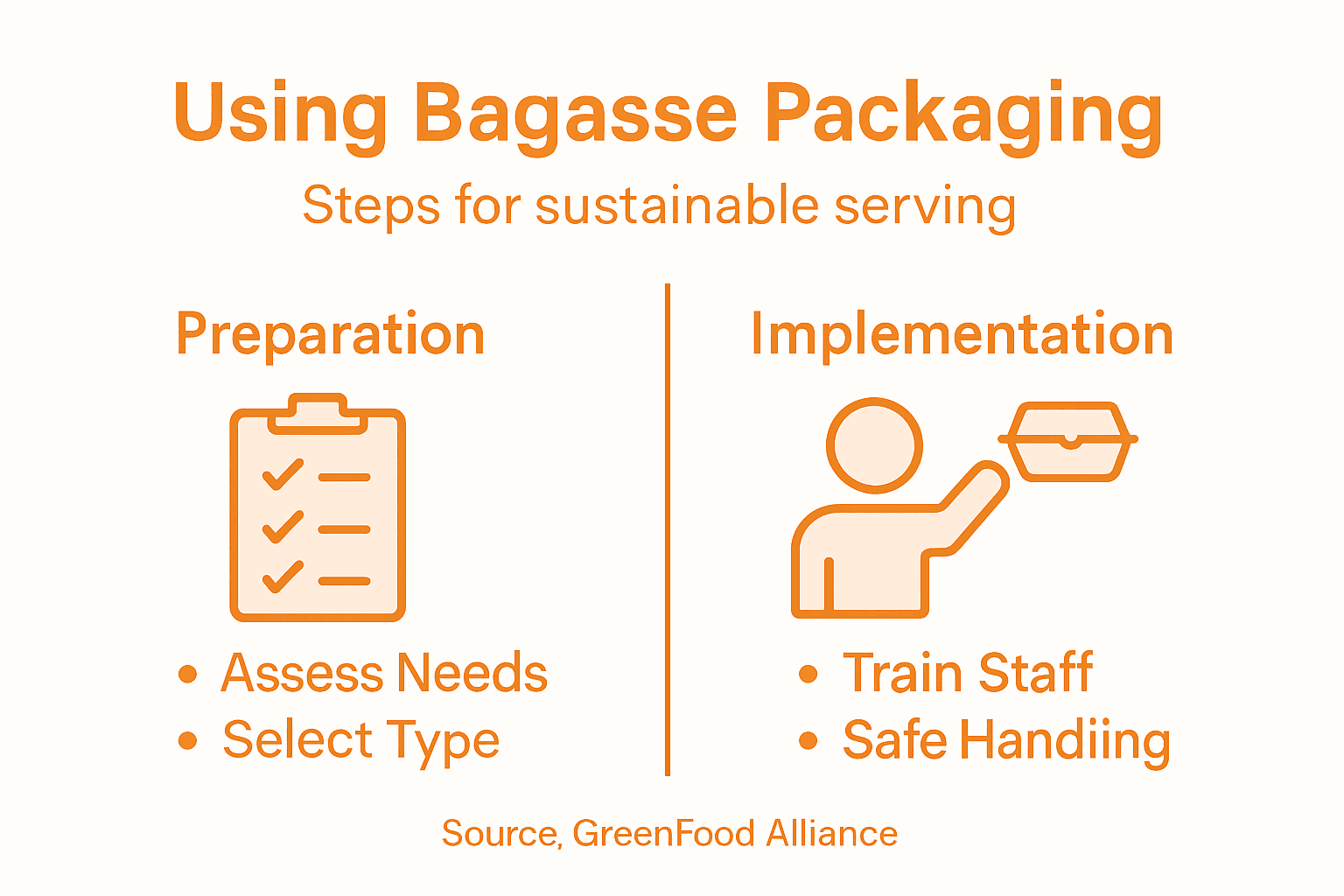
Top tip: Develop a standardised training module that demonstrates precise handling techniques and visual presentation methods specific to bagasse packaging.
Verifying eco-compliance and customer satisfaction is the crucial final stage in your sustainable packaging journey. This process involves systematically evaluating your bagasse packaging’s environmental performance and understanding how it resonates with your customers’ expectations and values.
Key verification strategies include:
Comprehensive sustainability scorecards enable businesses to conduct thorough environmental impact assessments. These tools measure critical factors like plastic pollution reduction, sustainable sourcing, and overall ecological footprint of packaging materials.
True sustainability is not a destination, but a continuous journey of improvement and accountability.
By systematically verifying your bagasse packaging’s performance, you demonstrate a genuine commitment to environmental responsibility while meeting the growing consumer demand for transparent, eco-conscious business practices.
Below is a summary of how to verify eco-compliance and achieve customer satisfaction with bagasse packaging:
| Verification Area | Example Method | Outcome for Business |
|---|---|---|
| Environmental assessment | Use objective scorecards | Demonstrates reduced footprint |
| Customer feedback | Collect post-service surveys | Reveals perception and satisfaction |
| Performance tracking | Monitor material usage trends | Identifies areas for improvement |
| Continuous improvement | Adjust practices quarterly | Ensures ongoing compliance |
Top tip: Develop a quarterly sustainability review process that combines objective environmental metrics with direct customer feedback to drive ongoing packaging improvements.
Transitioning to eco-friendly food packaging like bagasse presents real challenges such as finding the right container sizes, ensuring durability for hot foods, and maintaining presentation standards. If you want to overcome these hurdles while boosting your brand’s commitment to sustainability and customer satisfaction, the solution is easier than you think. Discover a wide range of bagasse packaging options tailored to meet diverse food service requirements at GrabnGo Packaging.
Explore our collection designed specifically for businesses ready to reduce their environmental footprint without sacrificing quality or convenience. Whether you need sturdy containers, bespoke printed items, or reliable bulk supplies, our site offers the perfect balance of variety, competitive pricing and fast delivery. Take the next step now toward a greener future for your food service business by visiting our homepage and start transforming your packaging practices with confidence.
Assess your food packaging needs by calculating your daily or weekly usage, considering the types of dishes you serve, and identifying temperature requirements for your food. Conduct a thorough inventory review to look for opportunities to streamline your packaging approach.
When selecting bagasse packaging, evaluate the container size, food temperature requirements, service style, and durability. This will ensure the packaging aligns with your portion sizes and operational needs.
Prepare your staff by providing training on the properties and handling of bagasse packaging, establishing organised storage for the new materials, and developing hygiene protocols. Schedule hands-on training sessions to familiarise your team with these new procedures.
Implement safe handling by storing bagasse packaging in cool, dry environments, using clean procedures to prevent contamination, and ensuring compliance with food safety regulations. Create visual reference guides to assist staff in presenting the packaging attractively.
Verify eco-compliance by conducting regular environmental assessments and collecting customer feedback on your packaging. Monitor sustainability metrics quarterly to ensure continuous improvement and accountability.
Using bagasse packaging can significantly reduce your ecological footprint, as it is made from renewable sugarcane waste material. This not only serves to enhance your brand’s commitment to sustainability but also minimizes the need for traditional plastic packaging, making it a practical and responsible option.