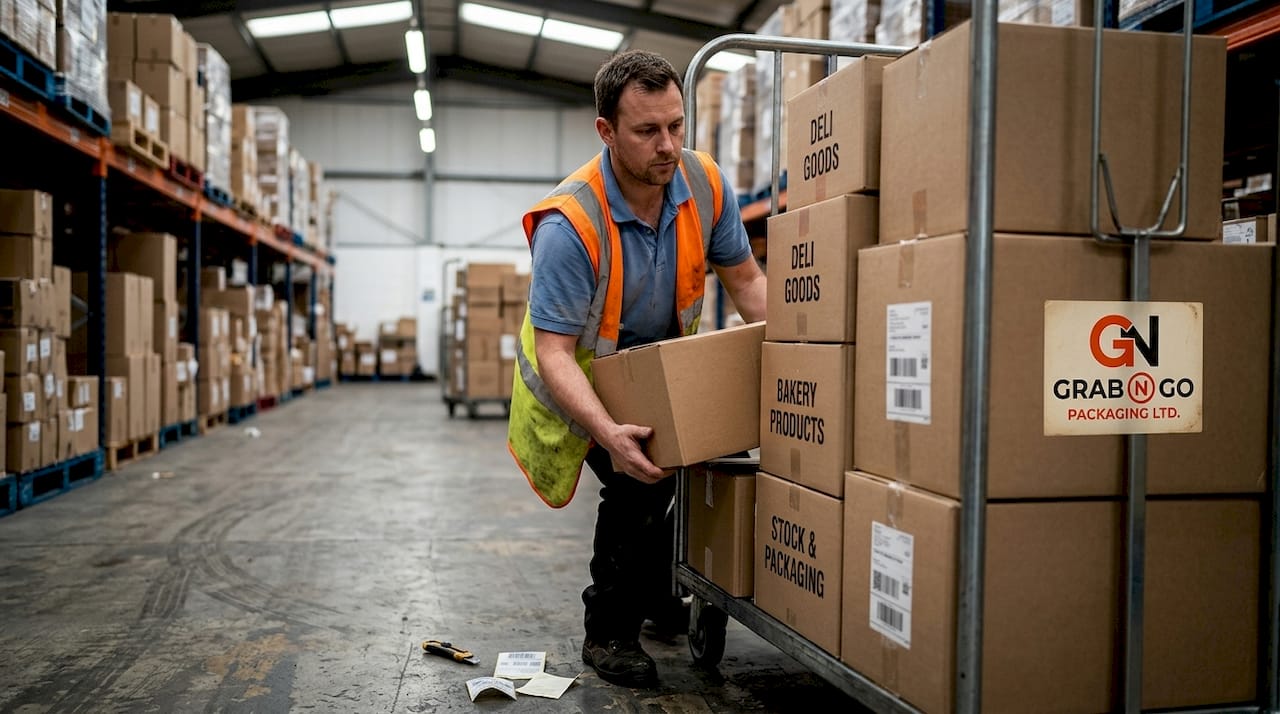
Choosing the right packaging for your food service business in the United Kingdom often means balancing cost, durability, and sustainability. Corrugated packaging stands out because it offers reliable protection while remaining lightweight and hygienic, qualities that are essential for direct food contact. With more than 80 percent of corrugated packaging already recycled in the United Kingdom, this versatile material makes it easier to meet both legal requirements and consumer expectations for eco-friendly business practices.
Table of Contents
- Corrugated Packaging Defined and How It Works
- Major Types Used in Food Packaging
- Key Benefits for Food Businesses
- Sustainability and Legal Compliance in the UK
- Costs, Risks, and Branding Considerations
Key Takeaways
| Point | Details |
|---|---|
| Corrugated Packaging Structure | Corrugated packaging consists of multiple layers, providing exceptional strength and shock absorption ideal for transporting goods, particularly in the food industry. |
| Types of Corrugated Boards | Single-wall, double-wall, and triple-wall boards offer varying levels of protection, with single-wall being light for bakery items and triple-wall for bulk and heavy products. |
| Economic and Environmental Benefits | Corrugated packaging helps reduce shipping costs and product damage while aligning with sustainability goals, making it a cost-effective choice for food businesses. |
| Regulatory Compliance | Understanding UK packaging regulations is crucial for food businesses; corrugated packaging easily meets safety, recyclability, and environmental standards. |
Corrugated Packaging Defined and How It Works
Corrugated packaging represents an ingenious paper-based packaging solution designed to protect and transport goods with remarkable efficiency. Corrugated fibreboard construction involves multiple layers of paper that create a structurally robust and versatile material ideal for numerous applications, particularly in the food service industry.
The core structure of corrugated packaging consists of three primary layers: two flat linerboards sandwiching a wavy, fluted middle layer called the medium. This unique design provides exceptional strength and shock absorption capabilities. The middle fluted layer acts like a series of small arch supports, distributing weight and impact forces across the packaging, which makes corrugated materials significantly more resilient than traditional single-layer packaging options.
Manufacturing corrugated packaging involves precise engineering techniques that transform Kraft paper into a high-performance protective material. Advanced manufacturing processes apply high temperatures to ensure the packaging meets stringent hygiene standards, making it particularly suitable for direct food contact. The material’s inherent properties allow for excellent cushioning during transportation, protecting delicate items from potential damage while maintaining structural integrity.
Pro tip: When selecting corrugated packaging for food transportation, always consider the specific weight, fragility, and temperature requirements of your products to ensure optimal protection and preservation.
Major Types Used in Food Packaging
Food packaging requires diverse corrugated packaging solutions, with multiple configuration types designed to meet specific protection and transportation needs. The primary categories include single-wall, double-wall, and triple-wall corrugated boards, each offering unique characteristics that make them suitable for different food industry applications.
Single-wall corrugated packaging represents the most common type, featuring one fluted medium layer between two flat linerboards. This configuration provides lightweight protection ideal for lighter food products like bakery items, packaged snacks, and dry goods. Its versatility allows manufacturers to adapt the board with special coatings that enhance moisture resistance and food safety, making it an essential packaging solution for many food service businesses.

Double-wall and triple-wall corrugated packaging offer increasingly robust protection for heavier or more delicate food items. Advanced packaging configurations enable food manufacturers to transport fragile products like fresh produce, frozen goods, and catering supplies with minimal risk of damage. These multi-layered designs distribute impact forces more effectively, creating a protective environment that maintains product integrity during shipping and handling.
The following table summarises the main types of corrugated board used in food packaging and highlights their typical applications:
| Board Type | Number of Layers | Typical Food Uses | Key Benefit |
|---|---|---|---|
| Single-wall | 3 | Bakery goods, snacks | Lightweight, cost-effective |
| Double-wall | 5 | Fresh produce, frozen foods | Increased strength |
| Triple-wall | 7 | Bulk catering, heavy items | Superior protection |
Pro tip: When selecting corrugated packaging, always match the board type to your specific product weight, fragility, and transportation requirements to ensure optimal protection and cost-effectiveness.
Key Benefits for Food Businesses
Food businesses can leverage significant packaging advantages through corrugated packaging that extend far beyond simple product protection. These innovative packaging solutions offer a comprehensive approach to addressing critical operational challenges, combining economic efficiency with environmental responsibility and brand enhancement.
The primary economic benefits include substantial cost savings through reduced product damage and optimised shipping processes. Corrugated packaging’s lightweight yet robust design minimises transportation expenses while providing superior protection for food items. Businesses can dramatically reduce waste by selecting packaging that maintains product integrity during transit, ultimately improving their bottom line and operational efficiency. The material’s adaptability also allows for advanced branding opportunities, enabling companies to create custom printed packaging that communicates their brand identity and differentiates their products in a competitive marketplace.
Moreover, corrugated packaging supports broader sustainability goals that are increasingly important to modern consumers. Its high recyclability and environmentally friendly manufacturing process align with growing regulatory requirements and consumer preferences for eco-conscious businesses. Food service companies can demonstrate their commitment to environmental stewardship by selecting packaging solutions that minimise carbon footprint while maintaining exceptional product protection and presentation standards.

Pro tip: Consider requesting sample packaging from suppliers to thoroughly test protection levels and branding potential before committing to large-scale production orders.
Sustainability and Legal Compliance in the UK
The United Kingdom has established robust regulatory frameworks for packaging that directly impact how food businesses manage their packaging materials. These regulations mandate comprehensive responsibilities for producers, emphasising environmental sustainability and waste reduction across the packaging lifecycle.
Extended Producer Responsibility (EPR) regulations require businesses to take complete accountability for their packaging, from production through to disposal and recycling. This means food service companies must meticulously track and report their packaging quantities, pay associated fees, and demonstrate a commitment to reducing environmental impact. Corrugated packaging stands out as an excellent solution, given its high recyclability and alignment with these stringent legal requirements. The regulations incentivise businesses to choose materials that can be easily recycled and minimise waste, making corrugated packaging an increasingly attractive option for conscientious food enterprises.
Moreover, the UK Packaging Essential Requirements impose strict standards on packaging materials, particularly for food contact applications. These regulations ensure that packaging is safe, minimises hazardous substances, and can be effectively recycled. Food businesses must navigate these complex legal landscapes, ensuring their packaging meets specific design and material standards that support the circular economy principles. Compliance involves carefully selecting packaging solutions that not only protect food products but also demonstrate environmental responsibility.
Here is a quick reference for legal and sustainability aspects affecting corrugated packaging in the UK food sector:
| Regulation/Standard | Focus | Implication for Food Businesses |
|---|---|---|
| Extended Producer Responsibility | End-of-life treatment | Track, report, and recycle packaging |
| Packaging Essential Requirements | Food safety & design | Ensure material is safe and recyclable |
| UK Circular Economy Initiatives | Sustainability goals | Encourage use of eco-friendly options |
Pro tip: Conduct a comprehensive packaging audit annually to ensure ongoing compliance with current UK packaging regulations and identify opportunities for sustainable improvements.
Costs, Risks, and Branding Considerations
Food businesses must carefully evaluate the economic landscape of packaging through a strategic lens, considering comprehensive packaging economics that balance immediate costs with long-term value. Corrugated packaging presents a nuanced financial proposition that extends beyond simple price comparisons, requiring a holistic assessment of shipping efficiency, product protection, and brand perception.
The primary financial advantage emerges from corrugated packaging’s lightweight design, which directly translates to reduced shipping expenses. Businesses can achieve substantial cost savings by selecting packaging materials that minimise transportation weight without compromising structural integrity. However, these economic benefits must be carefully balanced against potential risks such as inadequate product protection. Selecting the incorrect packaging density or design could result in product damage, potentially negating any initial cost savings and introducing significant financial liability.
Branding represents another critical dimension of packaging strategy. Corrugated materials offer remarkable versatility for visual communication, enabling businesses to transform packaging from a mere protective shell into a powerful marketing tool. Digital printing technologies allow for intricate graphic designs, sustainability messaging, and brand storytelling directly on packaging surfaces. This approach not only enhances visual appeal but also communicates a company’s commitment to environmental responsibility and professional presentation, creating additional value beyond basic product transportation.
Pro tip: Conduct periodic packaging prototype testing to validate both protective capabilities and branding effectiveness before committing to large-scale production runs.
Discover Reliable Corrugated Packaging Solutions for Your Food Business
Managing the challenges of protecting delicate food products during transportation requires packaging that delivers strength, hygiene, and sustainability. This article highlights how corrugated packaging’s durable multi-layer design safeguards food items while supporting environmental compliance and effective branding. If maintaining product integrity and complying with UK packaging regulations are essential priorities for your food business, you need packaging that meets these high standards without compromising cost-efficiency.

Explore a wide range of corrugated and eco-friendly packaging supplies at Grabngo Packaging. Whether you need single-, double-, or triple-wall corrugated options customised for bakery goods, frozen foods, or catering orders, our ecommerce platform offers competitively priced solutions tailored for the food service industry. Act now to reduce product damage, boost your brand impression with customised print options, and ensure compliance with UK sustainability laws. Visit Grabngo Packaging today to find packaging that protects your products and supports your business growth.
Frequently Asked Questions
What is corrugated packaging?
Corrugated packaging is a paper-based packaging solution made of multiple layers, including two flat linerboards and a wavy, fluted middle layer. This structure provides strength and shock absorption, making it suitable for protecting and transporting various goods, particularly in the food service industry.
What are the main types of corrugated packaging used in the food industry?
The primary types of corrugated packaging include single-wall, double-wall, and triple-wall boards. Single-wall is ideal for lighter food products; double-wall provides increased strength for heavier items, and triple-wall offers superior protection for bulk catering and heavy goods.
How does corrugated packaging benefit food businesses economically?
Corrugated packaging offers significant economic benefits, including reduced transportation costs due to its lightweight design, minimised product damage, and enhanced operational efficiency. These advantages can positively impact a food business’s bottom line.
What sustainability considerations should food businesses keep in mind when using corrugated packaging?
Food businesses should consider the high recyclability of corrugated packaging, which aligns with environmental goals and regulatory requirements. Choosing materials that can be easily recycled helps reduce waste and demonstrates a commitment to sustainability, appealing to eco-conscious consumers.
Recommended
- Complete Guide to the Role of Packaging in Food Presentation
- 7 Practical Examples of Packaging Materials for Food Businesses – Grab & Go Packaging
- The Essential Guide to Delivery Packaging
- Food Packaging for Delivery – Enhancing Experience and Safety
- Understanding Custom Packaging for Bakeries: What You Need to Know – Spaceman
- Environmental Impact of Plastic Packaging – Risks and Solutions – The Ocean Straw