

Most british café and takeaway owners feel the pressure to find packaging that goes beyond holding food. With over 60 percent of customers saying packaging influences their choice of takeaway, every detail matters. The right solution protects food, meets strict United Kingdom health laws, and strengthens your brand identity. If you want affordable, customizable packaging to keep customers happy and make your british business stand out, understanding your options is the first step.
| Point | Details |
|---|---|
| Importance of Takeaway Packaging | Takeaway packaging serves critical roles in protecting food quality, ensuring hygiene, and addressing environmental concerns. It must be both functional and sustainable. |
| Material Impact on Sustainability | The choice of packaging materials significantly affects environmental footprints. Businesses should favour biodegradable and recyclable options to enhance sustainability. |
| Legal Compliance Essentials | Compliance with food safety regulations is vital. Packaging must meet rigorous standards to protect public health and avoid legal repercussions. |
| Branding Through Packaging | Customised packaging can enhance brand recognition and customer experience. Strategic design communicates brand values and differentiates businesses in a competitive market. |
Takeaway packaging represents the specialised containers and materials designed to transport and protect prepared food from restaurant or catering establishments to consumers. These essential protective solutions serve multiple critical functions beyond simple transportation, ensuring food remains safe, hygienic, and appetising during transit.
According to research from the University of Manchester, takeaway packaging plays a pivotal role in maintaining food quality and addressing environmental concerns. The packaging must accomplish several key objectives: protecting food from potential contamination, maintaining appropriate temperatures, controlling portion sizes, and minimising environmental impact. Modern packaging solutions have evolved to balance practical functionality with sustainability considerations.
The Foodservice Packaging Association highlights that effective takeaway packaging requires carefully engineered materials that are simultaneously lightweight, cost-effective, and capable of preserving food integrity. Key characteristics include:
Pro tip: Select packaging materials that provide robust protection while minimising environmental footprint, considering both functional performance and sustainability metrics.
The United Kingdom’s takeaway packaging landscape encompasses a diverse range of materials and designs tailored to meet the complex needs of food service businesses. Research from the University of Manchester identifies three primary packaging material types dominating the market: aluminium containers, polypropylene containers, and extruded polystyrene (commonly known as Styrofoam).
According to the Foodservice Packaging Association, UK takeaway packaging materials are strategically selected to address multiple critical requirements. These materials must comply with stringent food safety regulations, provide effective thermal insulation, and offer practical handling characteristics. The primary packaging categories include:
Modern takeaway packaging in the UK goes beyond mere transportation, serving as a critical interface between food providers and consumers. Each material type offers unique advantages, from thermal performance to structural integrity, enabling restaurants and catering businesses to select packaging that best suits their specific culinary offerings and sustainability goals.
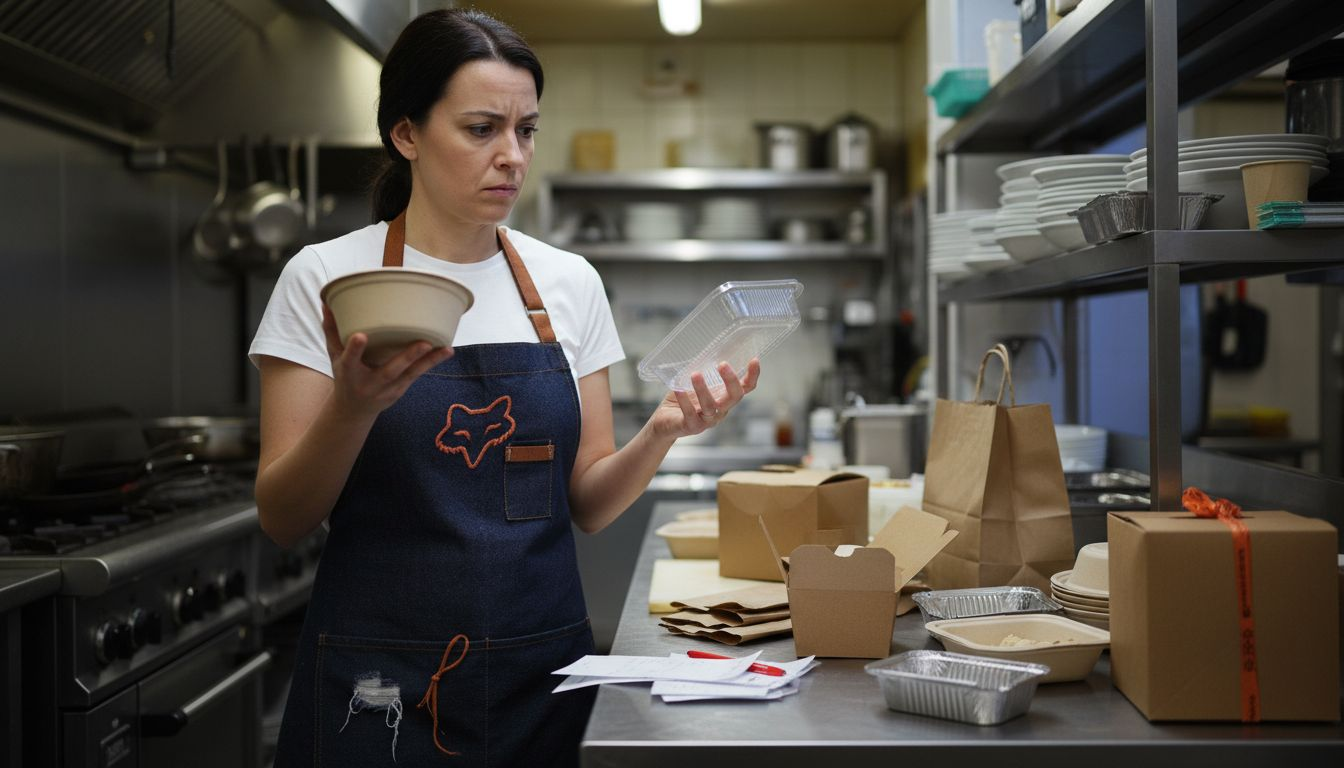
Here’s a comparative overview of common UK takeaway packaging materials and their key business implications:
| Packaging Material | Sustainability Impact | Typical Use Cases | Cost Implications |
|---|---|---|---|
| Plastic (Polypropylene) | High environmental cost | Wet or saucy dishes | Generally low upfront cost |
| Aluminium | Easily recycled | Hot meals, curries | Moderate, price fluctuates |
| Paper/Board | Biodegradable | Lightweight items | Variable, often affordable |
| Compostable/Bio-based | Lower carbon footprint | Eco-friendly offerings | Often higher than standard |
Pro tip: Evaluate packaging materials not just on cost, but on their environmental footprint, food preservation capabilities, and alignment with your brand’s sustainability commitments.
The landscape of takeaway packaging sustainability is rapidly evolving, with businesses increasingly recognising the critical importance of environmentally responsible material choices. Research from the University of Manchester reveals the complex environmental implications of different packaging materials, highlighting that single-use polypropylene packaging often carries more negative ecological impacts compared to alternative solutions.
Sustainable packaging options have emerged as a pivotal consideration for modern food service businesses. These innovative materials include:
Consumer awareness and environmental consciousness are driving significant shifts in packaging strategies. Businesses must now balance practical functionality with ecological responsibility, considering not just the immediate utility of packaging, but its entire lifecycle environmental impact. This approach requires careful evaluation of material sourcing, production processes, transportation energy, and end-of-life disposal mechanisms.
Pro tip: Conduct a comprehensive lifecycle assessment of your packaging materials, considering not just upfront costs but long-term environmental and brand reputation implications.
The Food Safety Act 1990 establishes the critical legal framework governing food packaging and safety standards in the United Kingdom. This comprehensive legislation mandates stringent requirements for food businesses, ensuring that every aspect of food packaging meets rigorous hygiene and contamination prevention protocols. Takeaway packaging must not only protect food but also comply with complex regulatory standards designed to safeguard public health.
Legal compliance in food packaging encompasses multiple critical dimensions:
Food service businesses must adopt a proactive approach to regulatory compliance. This involves continuous staff training, regular internal audits, and meticulous documentation of packaging sourcing and handling processes. Potential consequences of non-compliance include substantial financial penalties, potential business closure, and significant reputational damage.
Pro tip: Implement a robust quality management system that tracks packaging compliance across every stage of procurement, storage, and usage to mitigate potential legal risks.
Mass customisation research demonstrates that tailored packaging solutions are more than aesthetic choices – they represent strategic business communication tools. Takeaway packaging has evolved from mere functional containers to powerful brand ambassadors that communicate a business’s identity, values, and commitment to quality directly to consumers.
Customisation strategies for takeaway packaging can encompass multiple dimensions:
Successful businesses recognise that packaging serves as a critical touchpoint in customer interaction. Every design element, from colour selection to material choice, communicates a narrative about the brand’s personality, quality standards, and understanding of customer preferences. Strategic customisation can transform packaging from a mundane necessity into a memorable brand experience that distinguishes a business in a competitive marketplace.
Pro tip: Invest in packaging design that tells your brand’s unique story, balancing visual appeal with functional excellence to create lasting customer impressions.
Extended Producer Responsibility rules are transforming the economic landscape of takeaway packaging in the United Kingdom, introducing complex financial considerations for businesses. The shifting regulatory environment demands strategic approaches to packaging selection that balance cost-effectiveness with environmental sustainability and compliance requirements.
Common pitfalls in takeaway packaging procurement include:
Businesses must navigate these challenges by adopting proactive strategies. This involves carefully evaluating packaging solutions that minimise long-term costs, reduce environmental impact, and maintain compliance with evolving regulations. Sustainable alternatives such as recyclable materials, reusable containers, and innovative packaging designs can help mitigate financial risks while demonstrating corporate environmental responsibility.
To help businesses plan effectively, here’s a summary of major factors that influence the overall cost and sustainability of takeaway packaging:
| Factor | Effect on Cost | Impact on Sustainability | Strategic Approach |
|---|---|---|---|
| Regulatory Changes | Higher compliance fees | Drives eco-friendly choices | Monitor and adapt |
| Material Sourcing | Volatile market prices | Can increase carbon footprint | Source sustainably |
| Waste Management | Added disposal costs | Reduces landfill waste | Invest in recycling |
| Design Complexity | Increases bulk costs | May affect recyclability | Simplify design |
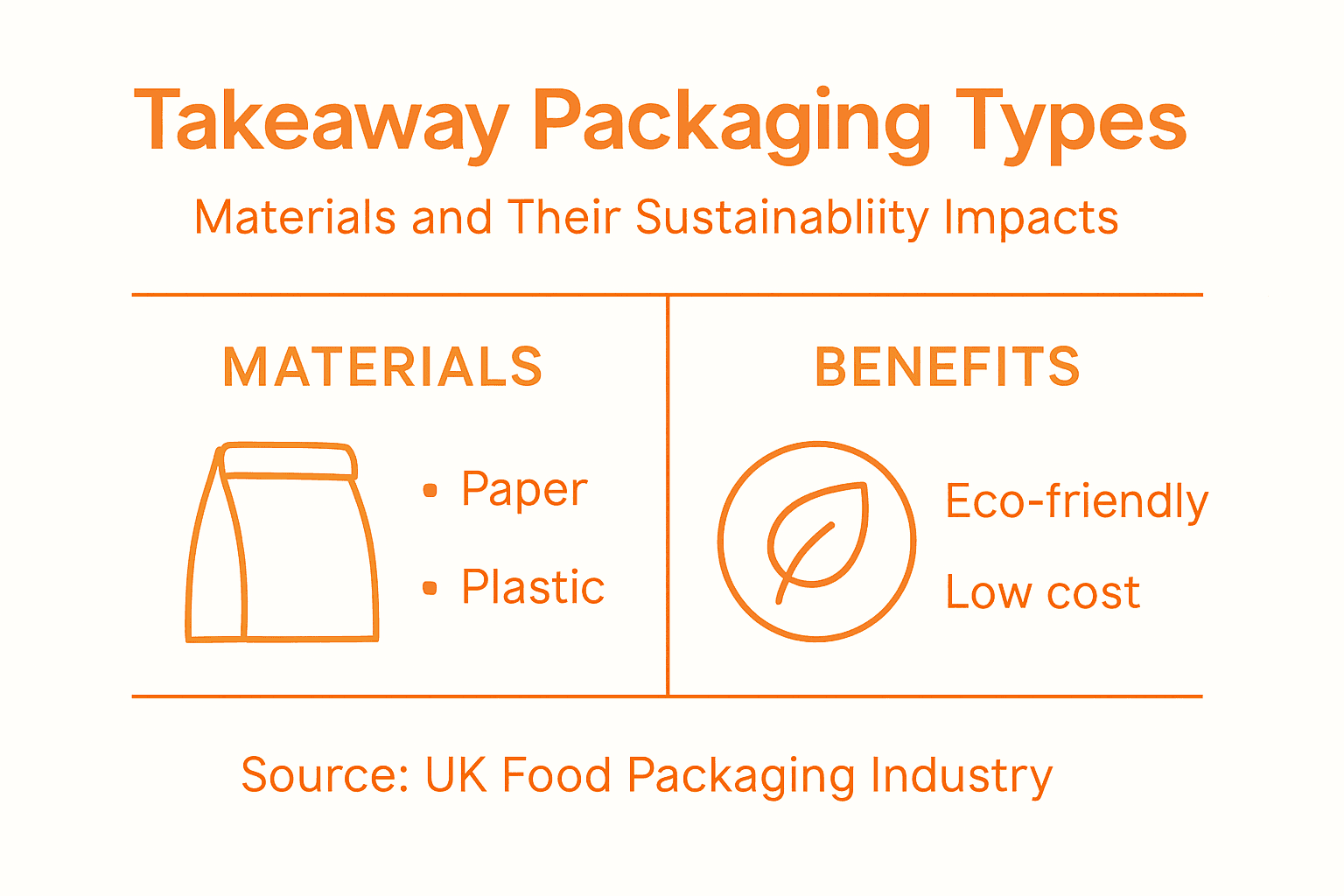
Pro tip: Conduct a comprehensive lifecycle cost analysis of packaging materials, considering not just initial purchase price but long-term environmental compliance, waste management, and potential regulatory penalties.
The challenge of selecting takeaway packaging that balances food safety, sustainability, and brand impact is real for many UK foodservice businesses. You want materials that protect your dishes, comply with regulations like The Food Safety Act 1990, and resonate with environmentally conscious customers. Grabngo Packaging offers a vast range of disposables, containers, and bespoke packaging solutions designed to meet these exact needs.
Discover how our products can help you maintain food quality and hygiene while showcasing your brand’s story through customisable options. Act now to secure competitively priced, eco-friendly packaging that aligns with your business goals. Visit Grabngo Packaging and explore our diverse selection tailored specifically for UK hospitality and takeaway sectors. Don’t wait for rising material costs and regulatory changes to impact your bottom line; prepare your packaging strategy with us today.
Takeaway packaging refers to specialised containers and materials designed to safely transport prepared food from restaurants or catering establishments to consumers, ensuring the food remains safe, hygienic, and appetising during transit.
Takeaway packaging plays a crucial role in protecting food from contamination, maintaining appropriate temperatures, and preventing bacterial growth, thereby ensuring compliance with hygiene regulations and safeguarding public health.
Common materials for takeaway packaging include paper and board, plastic (such as polypropylene and polystyrene), aluminium containers, and compostable materials. Each category offers unique benefits, such as biodegradability or heat retention.
Businesses can select sustainable takeaway packaging by evaluating materials based on their environmental impact, considering options like plant-based materials, compostable containers, and recycled paper, while balancing functionality and cost-effectiveness.