

Roughly 80 percent of British customers say that the quality of food packaging influences their impression of a delivery brand. For small and medium food delivery services, choosing the right packaging goes far beyond simply keeping meals hot or cold. This overview unpacks what food packaging for delivery really means, exploring how smart material choices and strong branding can help British businesses stand out and create memorable customer experiences.
| Point | Details |
|---|---|
| Importance of Packaging | Food packaging for delivery is crucial for maintaining safety, hygiene, and food quality during transit. |
| Material Selection | Choosing the right materials is essential; they should ensure protection while meeting sustainability criteria. |
| Regulatory Compliance | Adhering to UK food packaging regulations is mandatory to ensure consumer safety and trustworthiness. |
| Branding Opportunities | Effective packaging design can enhance brand recognition and create a positive customer experience. |
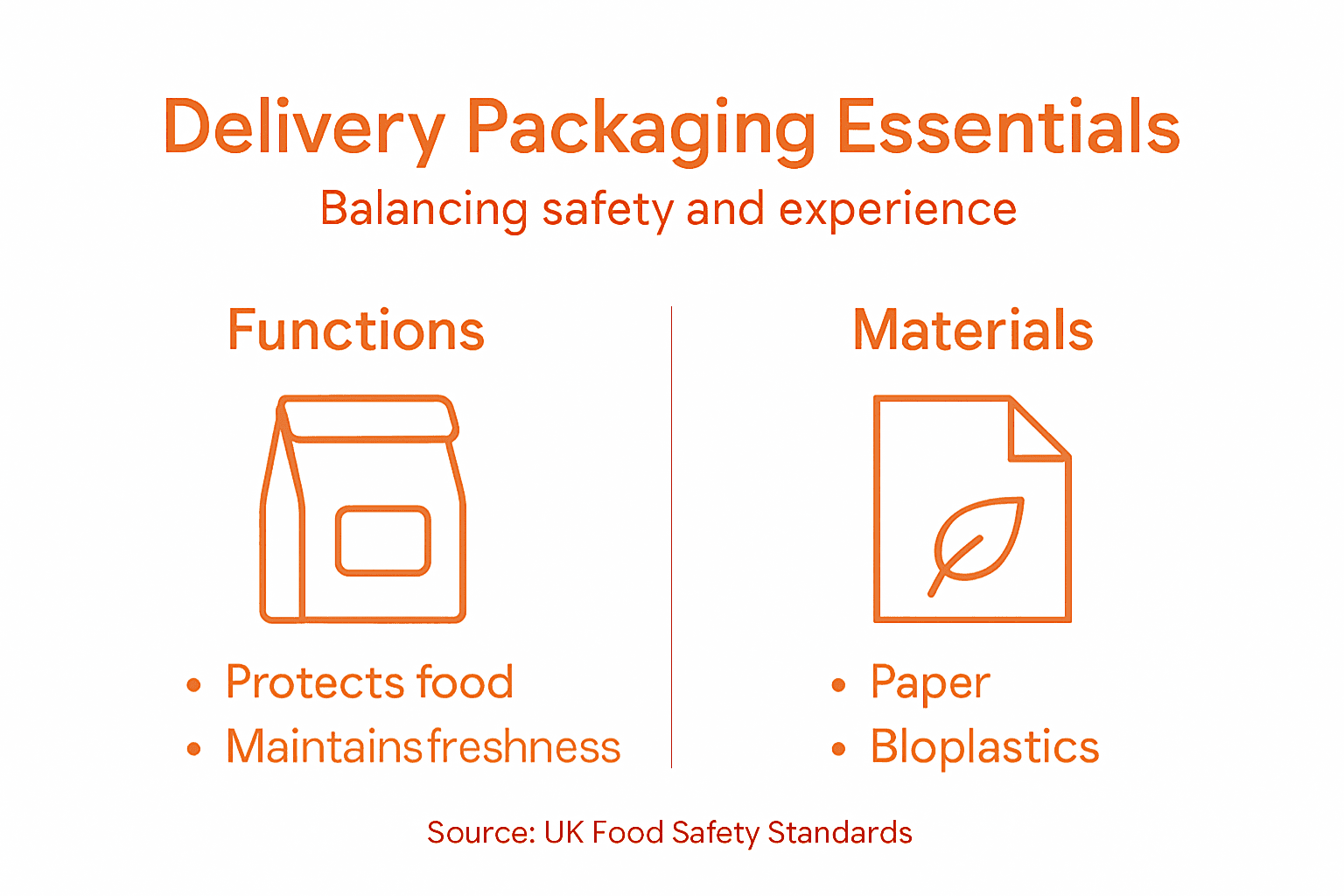
Food packaging for delivery represents a specialised category of containers and wrapping solutions designed specifically to transport prepared meals safely and efficiently from commercial kitchens to consumers’ homes or workplaces. The Foodservice Packaging Association emphasises that these packaging solutions must meet stringent safety, hygiene, and preservation standards while maintaining food quality during transit.
Unique characteristics distinguish delivery packaging from traditional food packaging. These containers must withstand temperature variations, prevent spillage, preserve food texture, and protect against contamination. Modern delivery packaging incorporates advanced materials and design principles that address multiple challenges simultaneously – from thermal insulation to structural integrity. The Food and Drink Federation highlights that contemporary packaging solutions must also align with sustainability regulations like Extended Producer Responsibility.
Typically, delivery food packaging encompasses several critical components:
Successful delivery packaging balances practical functionality with environmental considerations. Materials range from biodegradable plant-based options to recyclable plastics, each selected to maintain food safety while minimising ecological impact.
Pro tip: Invest in packaging that demonstrates both thermal performance and sustainability credentials to meet modern consumer expectations.
The food delivery packaging landscape encompasses a diverse range of materials and designs, each selected to address specific functional requirements. Foodservice packaging industry standards highlight multiple material options, including plastics, paper, cardboard, and innovative composite solutions that protect food integrity during transportation.
Delivery packaging materials can be categorised into primary material types:
The Less Waste sustainability guidelines emphasise that modern delivery packaging must balance protection, functionality, and environmental responsibility. This means selecting materials that not only preserve food quality but also minimise ecological impact through recyclability and responsible sourcing.
Advanced packaging technologies now incorporate features like moisture-control linings, ventilation systems, and temperature-regulating materials. These innovations ensure that whether delivering a hot curry or a delicate salad, the packaging maintains optimal food condition from kitchen to consumer.
Below is a summary comparing common packaging materials used in food delivery:
| Material Type | Protection Level | Sustainability Impact | Typical Use Cases |
|---|---|---|---|
| Plastic | High spill resistance | Low recyclability | Wet foods, salads |
| Cardboard | Moderate durability | Easily recycled | Pizzas, baked goods |
| Aluminium | Superior heat retention | Limited reusability | Hot meals, curries |
| Biodegradable Fibre | Good moisture barrier | Compostable, sustainable | Snacks, light meals |
| Compostable Plant-based | Fair thermal control | Breaks down naturally | Salads, dry foods |
Pro tip: Select packaging materials that demonstrate both superior food protection capabilities and strong environmental credentials to meet evolving consumer expectations.
Ensuring food safety and maintaining freshness during delivery requires a sophisticated approach to packaging design and temperature management. Foodservice packaging standards mandate comprehensive protection strategies that address multiple critical factors including contamination prevention, thermal regulation, and structural integrity.
Key features of effective delivery packaging include:
Food safety guidelines emphasise maintaining precise temperature ranges – keeping cold foods below 5°C and hot foods above 63°C. This critical temperature management prevents bacterial growth and preserves food quality throughout the delivery process.
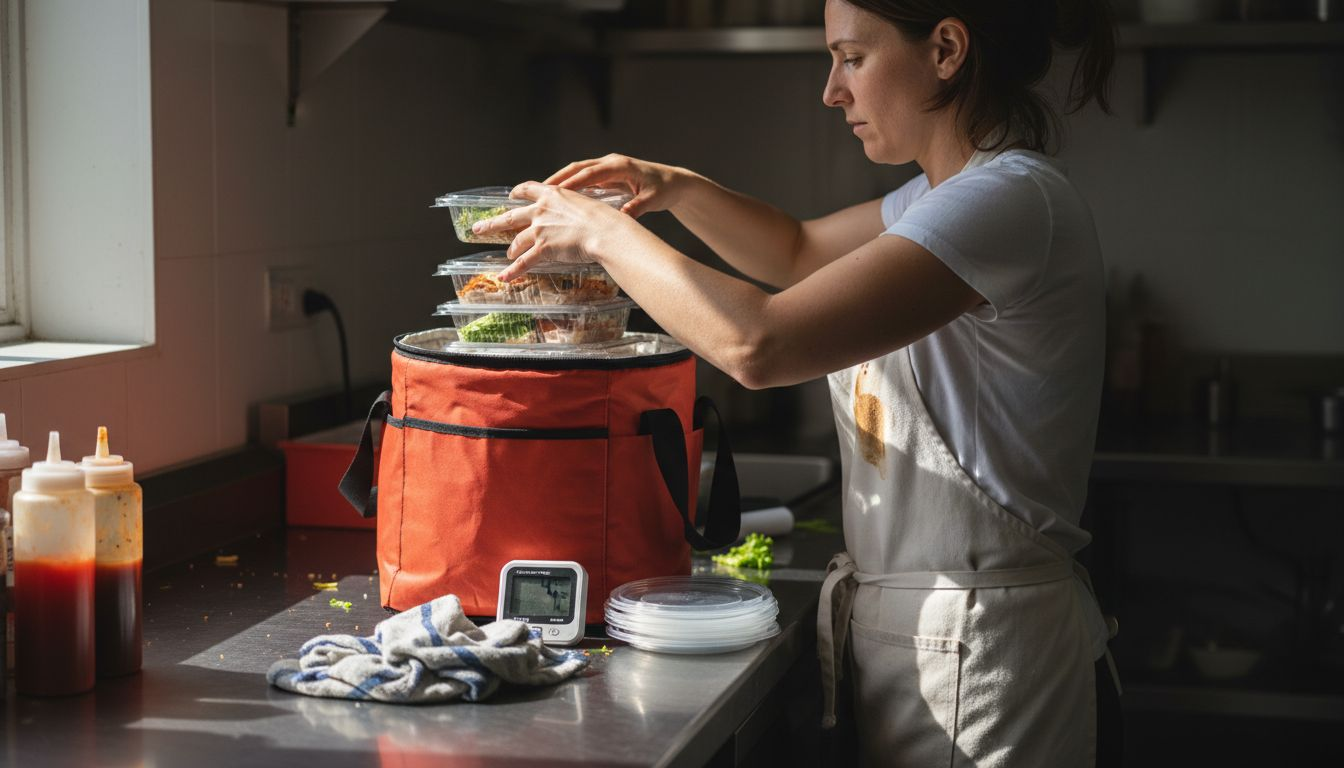
Modern packaging technologies incorporate advanced materials like antimicrobial coatings, breathable membranes, and intelligent sensors that can track temperature and humidity in real-time. These innovations transform packaging from a simple container to an active food preservation system that guarantees safety and quality.
Pro tip: Invest in multi-layered packaging solutions that provide temperature control, moisture management, and contamination prevention to maximise food safety during delivery.
Food packaging in the United Kingdom operates under a comprehensive regulatory framework designed to protect consumer health and ensure product safety. Food Safety Act guidelines establish fundamental requirements for food contact materials, mandating that packaging must not compromise food quality or pose health risks.
Key regulatory considerations for food packaging include:
The emerging Extended Producer Responsibility regulations are transforming packaging design by introducing stringent environmental accountability. These regulations require businesses to consider the entire lifecycle of packaging, from production through disposal, encouraging more sustainable and recyclable packaging solutions.
Regulatory compliance involves multiple layers of scrutiny, including material composition testing, migration limit assessments, and ongoing quality control. Food businesses must maintain comprehensive documentation demonstrating that their packaging meets strict safety standards across manufacturing, transportation, and storage processes.
Here is a quick reference highlighting key regulatory requirements for UK food delivery packaging:
| Regulatory Aspect | Business Obligation | Impact on Packaging Choice |
|---|---|---|
| Hygiene and Safety Standards | Maintain food-safe materials | Certified suppliers, audits |
| Labelling | Clear product identification | Legible, accurate information |
| Material Traceability | Document full supply chain | Source from approved sources |
| Environmental Assessment | Assess lifecycle impact | Use recyclable, eco-friendly |
Pro tip: Regularly audit your packaging supply chain to ensure continuous compliance with evolving UK food safety and environmental regulations.
Packaging serves as a powerful communication channel that extends far beyond mere product protection. Trademark and branding strategies reveal how visual elements like colour, shape, and design can transform packaging into a critical brand storytelling mechanism for food delivery businesses.
Key branding elements in delivery packaging include:
Food packaging regulations mandate that while branding is crucial, information transparency remains paramount. This means businesses must balance creative design with clear, informative labelling that builds consumer trust and meets legal requirements.
Modern delivery packaging represents a multisensory brand touchpoint. Beyond visual design, businesses can incorporate tactile experiences, unique textures, and interactive elements that engage customers and create memorable brand interactions. The packaging becomes more than a container – it transforms into a direct communication tool with potential for creating lasting impressions.
Pro tip: Design packaging that tells your brand’s story through thoughtful visual and tactile elements while ensuring regulatory compliance and information clarity.
Food delivery packaging requires meticulous attention to detail to prevent potential operational and regulatory pitfalls. Food safety checklists highlight critical areas where businesses frequently encounter packaging challenges that can compromise food quality and safety.
Common packaging mistakes include:
Waste reduction strategies emphasise that packaging mistakes extend beyond immediate food safety, potentially damaging brand reputation and environmental credibility. Businesses must balance protective functionality with sustainable design principles, ensuring packaging meets both regulatory standards and consumer expectations.
Successful packaging strategy requires continuous evaluation, understanding emerging technologies, and maintaining flexibility in design approaches. This means regularly reviewing packaging materials, staying informed about regulatory changes, and proactively addressing potential vulnerabilities in the delivery packaging process.
Pro tip: Conduct monthly packaging audits to identify potential design, safety, and sustainability improvements before they become critical issues.
Ensuring freshness and safety during food delivery presents challenges that require more than just ordinary packaging. This article highlights critical pain points such as temperature control, contamination prevention, and sustainability. If your business aims to avoid common mistakes like using non-food-grade materials or ignoring environmental impact, then tailored packaging solutions become essential. At GrabnGo Packaging, you will find a wide variety of containers, bags, and biodegradable options designed to protect food quality while supporting your brand’s story.
Discover packaging that not only safeguards your meals but also enhances customer experience with functional designs and eco-friendly materials. Act now to take advantage of competitive pricing and flexible order sizes that suit small or medium enterprises. Explore our full range of foodservice packaging supplies today at GrabnGo Packaging to meet your delivery needs with confidence and style.
Food packaging for delivery includes features such as temperature control mechanisms, contamination prevention methods, and structural integrity. Innovations may involve insulated linings, leak-proof designs, and bacteria-inhibiting surfaces to ensure food safety and freshness.
Material selection is crucial as it affects protection levels, sustainability, and overall food safety. Options range from plastic and cardboard for durability to biodegradable and compostable materials for environmental responsibility, each suited for different food types.
Common mistakes include using non-food-grade materials, failing to manage temperature correctly, and neglecting sustainability requirements. Poor material choices can compromise food quality, while inadequate hygiene practices may lead to contamination.
Effective packaging enhances the consumer experience by using visually appealing designs, memorable unboxing experiences, and clear labelling. It communicates brand values while ensuring that food arrives fresh and intact, ultimately building consumer trust.