

More than half of british food businesses now use disposable soup cups to serve hot meals safely and efficiently. With customers expecting convenience and quality in every serving, the choice of container has never mattered more. Whether you’re running a bustling café or managing event catering, understanding what sets a soup cup apart could transform the way you present and protect your delicious offerings.
| Point | Details |
|---|---|
| Purpose of Soup Cups | Soup cups are crucial for serving hot liquid foods, enhancing the dining experience through convenience and hygiene. |
| Material Selection | Different materials like paper, plastic, and ceramic cater to various operational needs, balancing sustainability and practicality. |
| Sizing Importance | Soup cup sizes typically range from 8oz to 32oz, allowing precise portion control and customer satisfaction. |
| Sustainability and Compliance | Businesses must prioritise sustainable materials and safety regulations to align with environmental and legal standards in food service packaging. |
A soup cup is a specialised container designed specifically for serving hot liquid food items within the food service industry. According to research from uou.ac.in, these vessels traditionally represent more than just a simple eating utensil – they are carefully engineered to enhance the dining experience.
In contemporary food service settings, soup cups come in multiple formats, with disposable options becoming increasingly prevalent. As documented by en.wikipedia.org, these containers can be manufactured from various materials including paper, plastic, and expanded polystyrene. The core purpose remains consistent: providing a convenient, hygienic method for serving and consuming hot liquid dishes.
The modern soup cup serves several critical functions for food service businesses:
Whether used in cafes, restaurants, catering services, or takeaway establishments, soup cups represent a fundamental tool in food presentation and service delivery. The right soup cup can significantly impact customer perception and overall dining experience.
Interested in exploring specific soup cup options? Check out our 16oz Soup Cup Kraft Vented Lids for a practical packaging solution.
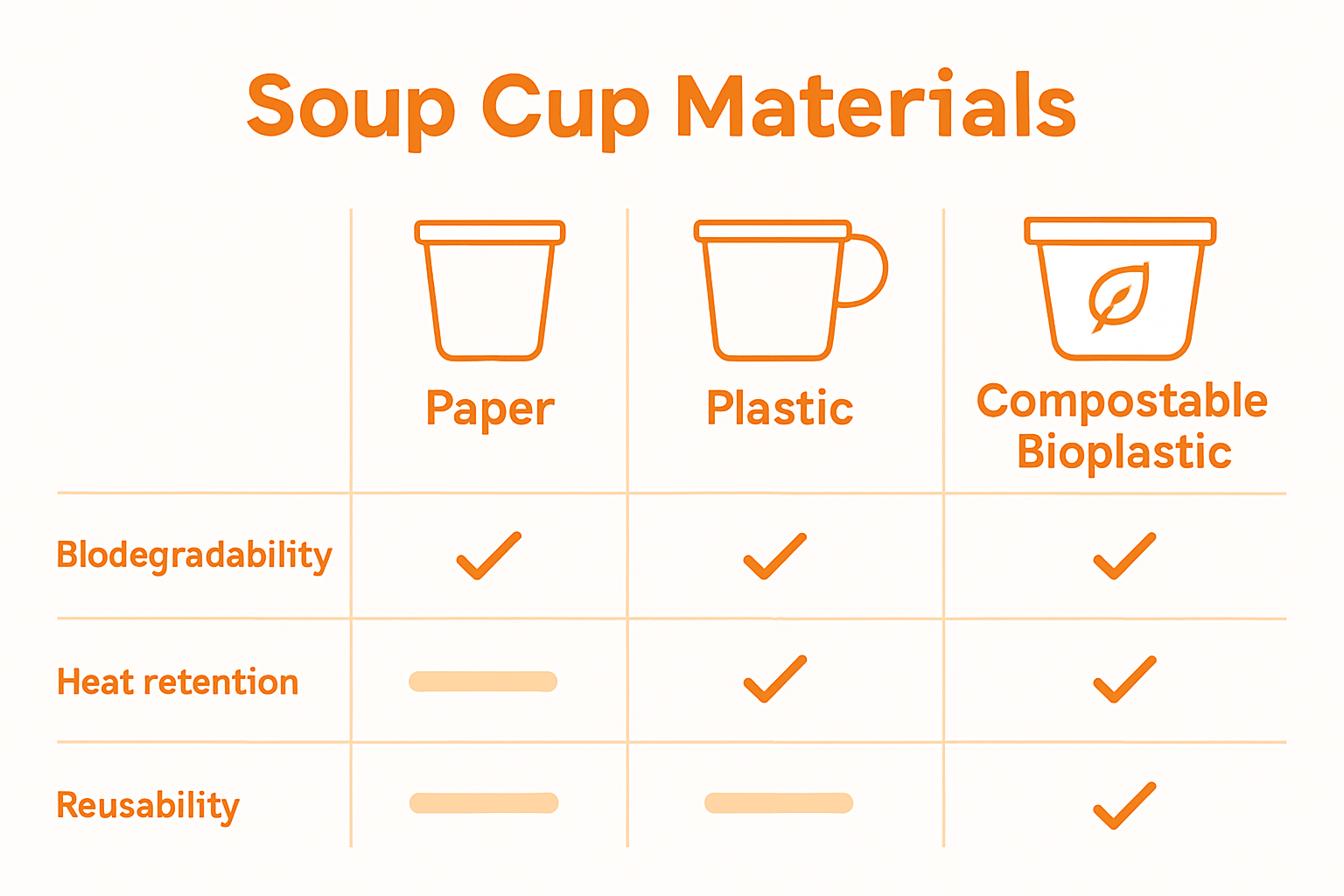
Soup cups are manufactured using a variety of materials, each selected to meet specific requirements for food service businesses. These containers range from traditional ceramic options to modern disposable alternatives, offering flexibility and practicality for different dining contexts.
The primary materials used in soup cup production include:
Professional food service operators must consider several factors when selecting soup cup materials, such as heat retention, cost-effectiveness, environmental impact, and customer experience.
 Disposable options like our 26oz Soup Cup Kraft Vented Lids provide an excellent balance between practicality and presentation.
Modern soup cups are engineered to address multiple operational challenges, including maintaining optimal food temperature, preventing leaks, and supporting convenient transportation.
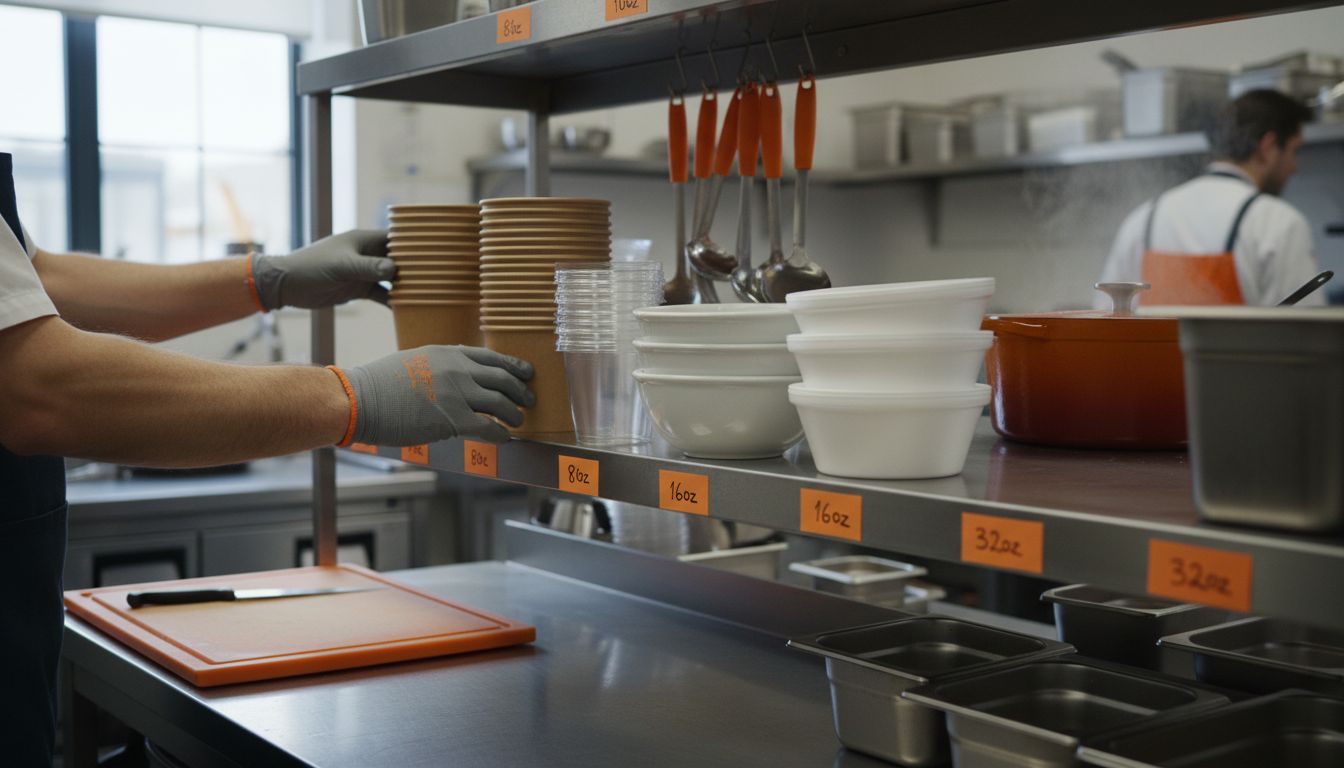 Whether you’re running a busy café, restaurant, or catering service, selecting the right soup cup material can significantly enhance your food service efficiency and customer satisfaction.
Soup cup sizing is a critical consideration for food service businesses, with dimensions ranging typically from compact 8oz containers to more substantial 32oz options. These varying sizes enable businesses to match portion requirements precisely, ensuring customer satisfaction and operational efficiency.
Key features that food businesses should evaluate when selecting soup cups include:
Professional food service operators must carefully balance portion control, customer expectations, and practical considerations when choosing soup cup sizes. For instance, the Essential Guide to Packaging in Takeaway Operations highlights the importance of selecting appropriate container sizes for different dining contexts.
Understanding the nuanced requirements of different food service environments is crucial. Smaller 8oz cups work brilliantly for starter portions or light soups, while 26oz and 32oz containers are ideal for hearty meals or shared dining experiences. The right soup cup size can significantly enhance customer perception, operational efficiency, and overall dining satisfaction.
Soup cups play a versatile role across diverse food service environments, offering remarkable flexibility for serving, storage, and transportation. According to ecatering.co.uk, modern soup cups are engineered to accommodate multiple culinary applications beyond traditional soup serving.
Practical applications for soup cups span multiple food service scenarios:
Storage considerations are equally critical for food service businesses. Ideal soup cups should be:
For comprehensive insights into optimising your packaging strategy, explore our Complete Guide to Takeaway Packaging in Catering. By selecting the right soup cup, food service businesses can enhance operational efficiency, customer satisfaction, and overall dining experience.
Food service packaging demands rigorous attention to sustainability, safety, and legal compliance. Modern businesses must navigate complex requirements that balance environmental responsibility, consumer protection, and regulatory standards when selecting soup cups and related food containers.
Key sustainability considerations for food service businesses include:
Safety standards are paramount in food packaging selection. Businesses must ensure soup cups meet stringent requirements:
For comprehensive guidance on selecting responsible packaging solutions, explore our Selecting Disposable Containers Guide for Food Businesses. Effective packaging choices represent a critical intersection of environmental stewardship, regulatory compliance, and operational excellence.
Serving hot soups with the right cup can make all the difference to your customers experience and your business efficiency. This article highlights key challenges like maintaining temperature, portion control and environmental responsibility that every food service operator must face. Choosing the ideal soup cup material and size ensures your soups stay fresh and appealing while providing leak resistance and easy portability.
Discover a wide range of soup cups and lids at Grabngo Packaging designed specifically for UK food service needs. From eco-friendly kraft options to sturdy vented lids providing heat retention and leak prevention our products help you address critical issues discussed in this guide. Explore our selection and take advantage of expert packaging advice in the Selecting Disposable Containers Guide for Food Businesses. Don’t wait to improve your service quality and customer satisfaction. Visit https://grabngopackaging.co.uk/ now and find the perfect soup cup solutions tailored for your food business.
Soup cups are typically made from paper and kraft materials, polypropylene plastics, ceramic, expanded polystyrene, and compostable bioplastics. Each material is chosen for its specific properties related to heat retention, durability, and environmental impact.
Soup cups generally range in size from 8oz to 32oz. This variety allows food service businesses to offer appropriate portion sizes for different dining contexts, from starters to hearty meals.
Disposable soup cups are designed with materials that possess excellent heat retention properties. Some options are particularly effective at insulating hot liquids, which helps keep the food at optimal serving temperatures during transportation or service.
Soup cups offer multiple benefits, including maintaining optimal food temperature, enabling convenient portability, supporting portion control, facilitating easy consumption, and presenting a professional appearance during service.