
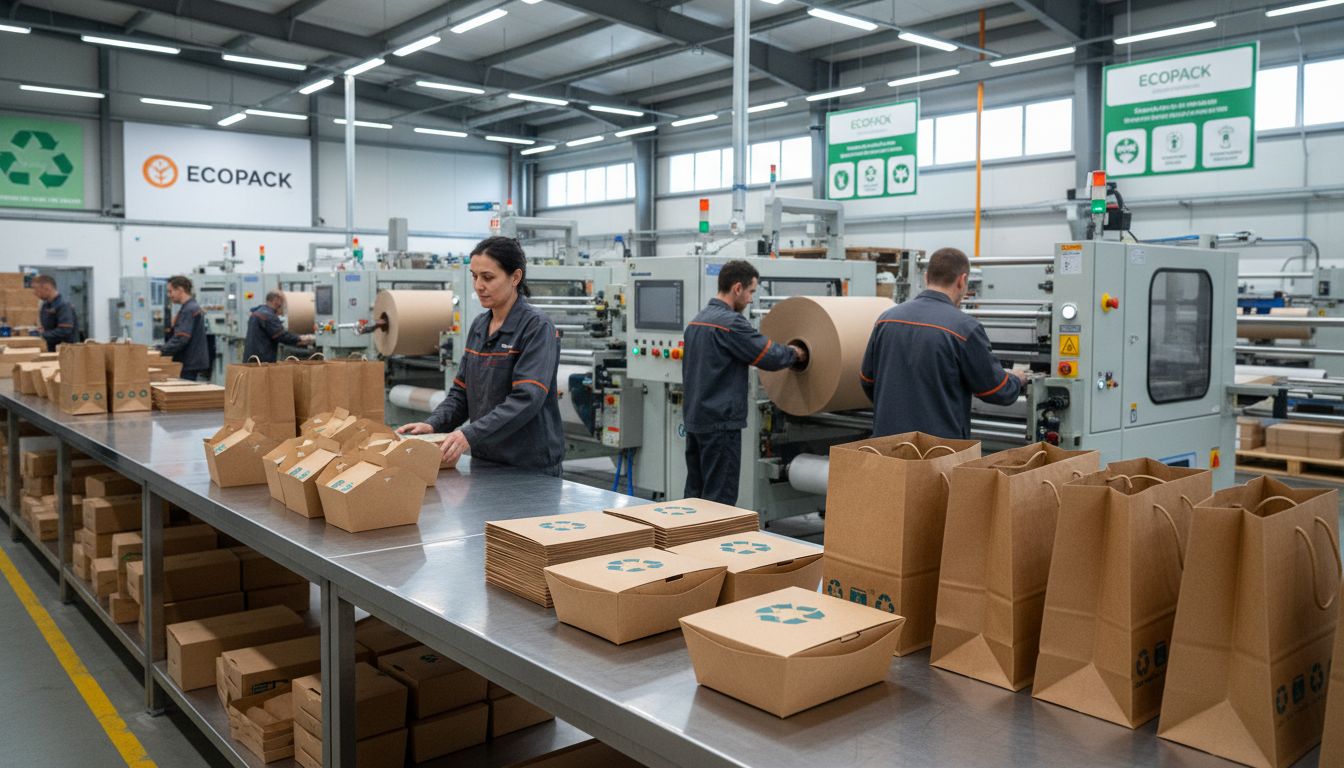
Over 400 million tons of paper and cardboard are produced worldwide each year, and kraft paper plays a major role in this demand. This strong, brown material shows up in everything from takeaway food boxes to bakery bags, yet few people know what gives it its durability and eco-friendly edge. Learning how kraft paper is made reveals why it stands out for food service packaging, offering both environmental peace of mind and reliable performance.
| Point | Details |
|---|---|
| Kraft Paper Composition | Kraft paper is made from wood pulped through a chemical process, revealing strong cellulose fibers and exceptional durability. |
| Types and Uses | Three main types of kraft paper (CUK, SBS, CRB) cater to different packaging needs in the food service industry. |
| Eco-Friendly Attributes | Kraft paper is biodegradable, recyclable, and free from harmful chemicals, making it a sustainable choice for packaging. |
| Selection Considerations | Choosing the right kraft paper depends on factors like weight, appearance, and specific food packaging requirements. |
Kraft paper emerges from a fascinating industrial process that transforms wood into a versatile packaging material. Kraft paper is produced through a specialized chemical pulping method that breaks down raw wood materials into strong, durable fibers. According to Wikipedia, this process involves treating wood chips with a precise mixture of water, sodium hydroxide, and sodium sulfide to separate cellulose fibers by breaking down lignin.
The manufacturing journey begins with carefully selected wood sources, typically softwood trees like pine and spruce. These trees contain long, robust fibers that contribute to kraft paper’s exceptional strength and tear resistance. During the kraft process, wood chips undergo chemical treatment in large industrial digesters, where high temperatures and chemical solutions effectively dissolve the lignin that binds wood fibers together. This unique approach ensures that cellulose remains intact, creating a paper product with superior mechanical properties.
The resulting pulp undergoes several critical refinement stages to achieve the desired characteristics for packaging applications. Manufacturers can adjust the production process to create kraft paper with varying weights, textures, and strengths. Some key features of kraft paper include:
For food service businesses seeking sustainable packaging solutions, understanding the intricate production of kraft paper provides valuable insights into its reliability and environmental credentials. Why Use Kraft Paper Bags: Complete Guide for UK Food Businesses offers additional context about how this remarkable material meets modern packaging requirements.
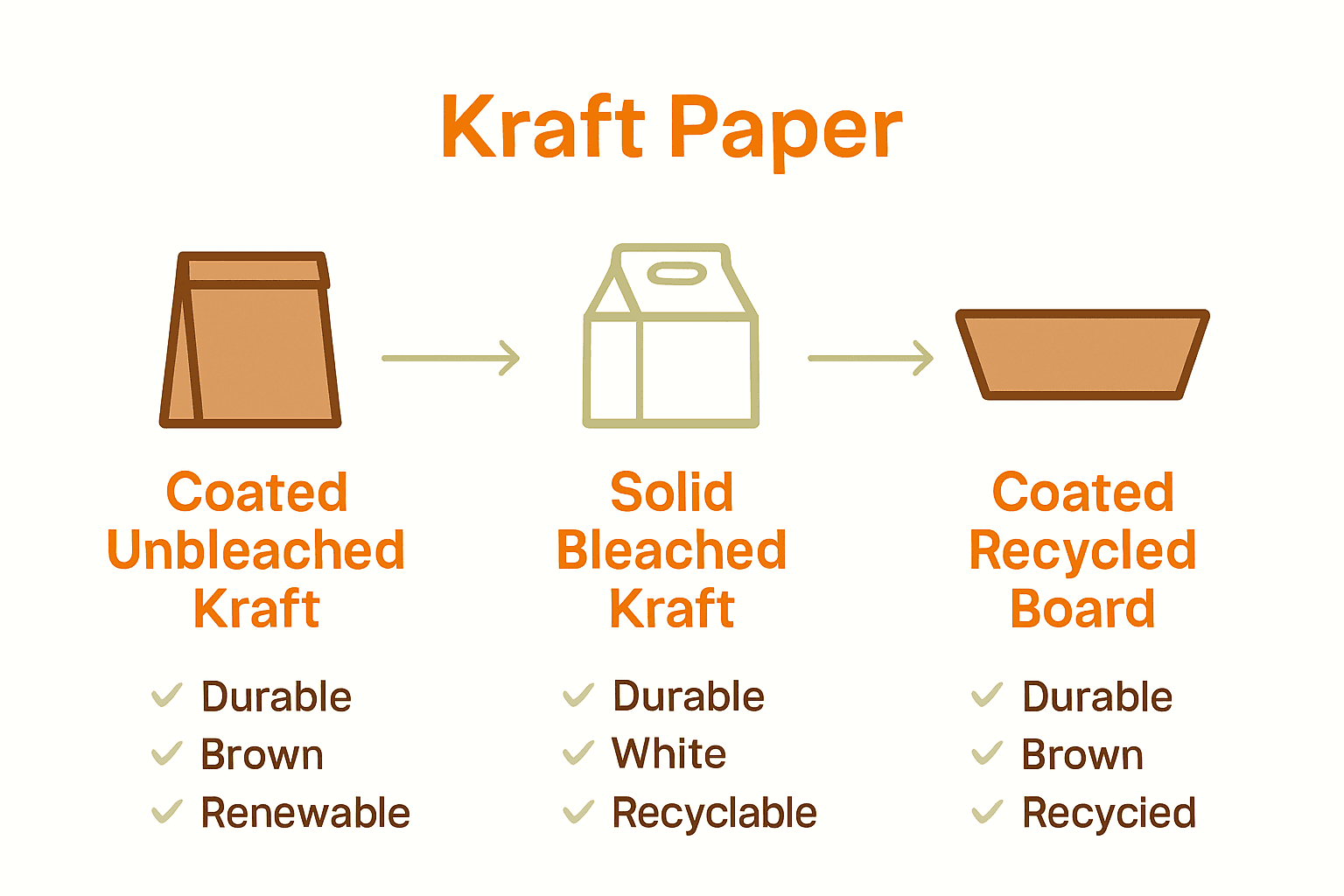
Kraft paper isn’t a one-size-fits-all material, but rather a versatile packaging solution with multiple variations tailored to specific business needs. According to tyt-eco, three primary types of kraft paper dominate the market: Coated Unbleached Kraft (CUK), Solid Bleached Kraft (SBS), and Coated Recycled Board (CRB). Each type offers distinct characteristics that make them suitable for different packaging applications in the food service industry.
Unbleached Kraft Paper retains its natural brown colour and represents the most traditional form of this material. This variant is prized for its raw, eco-friendly aesthetic and superior strength. Bleached Kraft Paper, in contrast, undergoes additional processing to create a clean white surface, making it ideal for businesses seeking a more refined, professional appearance. BachelorPrint highlights that these variations can be further classified into coated and uncoated options, providing food service businesses with remarkable flexibility.
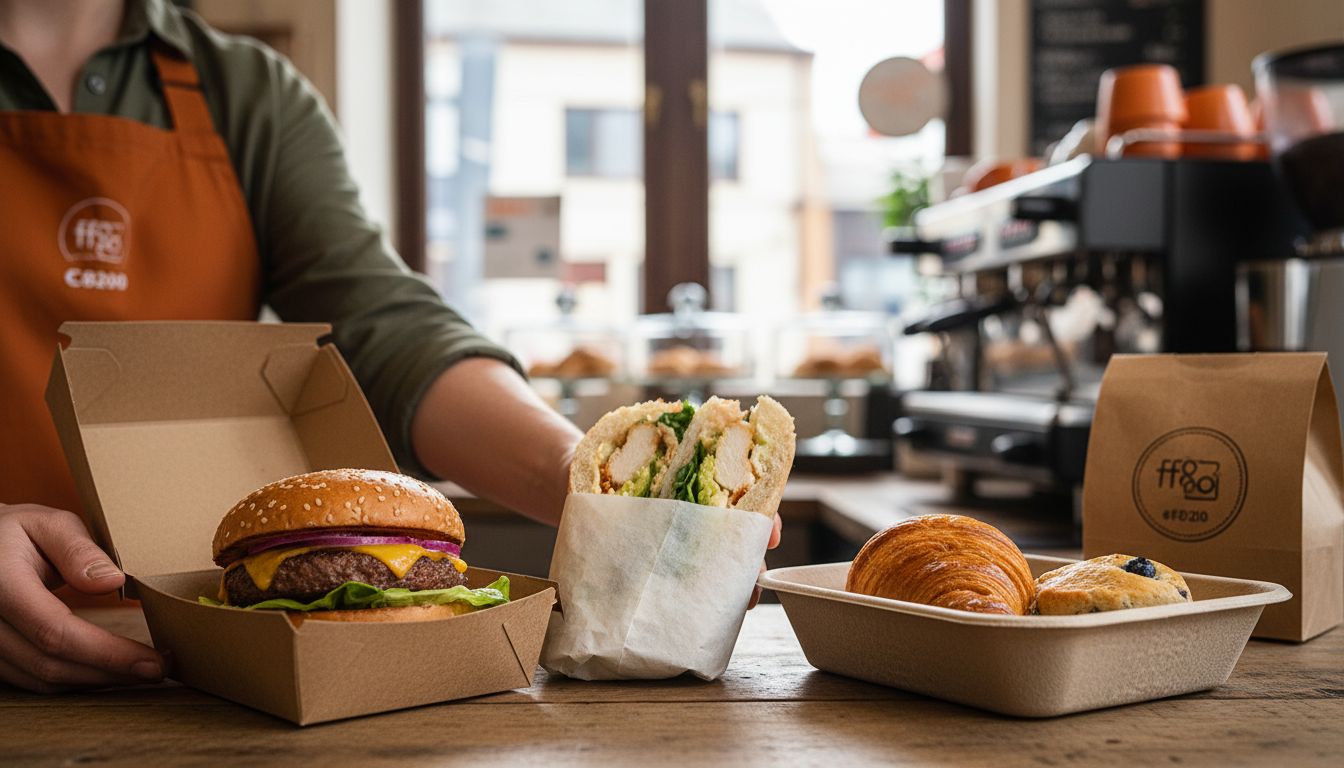
The specific characteristics of each kraft paper type make them uniquely suited to different packaging requirements. Here’s a quick breakdown of their primary applications:
For food service businesses looking to explore practical kraft paper solutions, the Large Kraft Gourmet Burger Box offers a tangible example of how these different kraft paper types can be applied in real-world packaging scenarios.
The production of kraft paper is a sophisticated industrial process that transforms raw wood into a versatile packaging material. According to Wikipedia, the kraft process involves treating wood chips with a carefully engineered mixture of hot water, sodium hydroxide, and sodium sulfide. This chemical cocktail works to break down lignin, effectively separating the strong cellulose fibers that give kraft paper its exceptional strength and durability.
The manufacturing journey begins with careful wood selection, typically focusing on softwood trees like pine and spruce. These woods are chosen for their long, robust fibers that contribute to the paper’s superior mechanical properties. In industrial digesters, wood chips undergo an intensive chemical treatment where high temperatures and precise chemical concentrations dissolve the lignin binding wood fibers together. This delicate process ensures that the cellulose structure remains intact, creating a pulp with remarkable tensile strength and resilience.
After the initial pulping stage, the kraft paper production involves several critical refinement steps:
For food service businesses seeking practical packaging solutions, the Medium Kraft Deli Bowls (750ml) represents an excellent example of how these intricate production processes translate into real-world packaging products that meet diverse industry needs.
Kraft paper has become an essential material in the food service industry, offering versatile and sustainable packaging solutions for businesses across various segments. According to Wikipedia, butcher paper – a specific type of kraft paper – has traditionally been used by butchers and fishmongers to wrap meat and fish, highlighting its water-resistant and durable characteristics. This legacy of practical food packaging continues to evolve in modern food service environments.
Takeaway containers, food wrappings, and disposable packaging represent key applications where kraft paper truly shines. Its natural properties make it ideal for containing everything from hot meals to cold sandwiches, providing excellent grease resistance and structural integrity. The material’s breathability prevents moisture accumulation, which is crucial for maintaining food quality during transportation and short-term storage. Different weights and treatments of kraft paper allow food service businesses to select precisely the right packaging for specific menu items.
The versatility of kraft paper in food service extends across multiple culinary contexts:
For food service businesses seeking comprehensive packaging strategies, The Essential Guide to Packaging in Takeaway Operations offers deeper insights into selecting the most appropriate packaging solutions for diverse food service needs.
Kraft paper stands out as a remarkably sustainable packaging solution with significant environmental credentials. According to BachelorPrint, the material is renewable, biodegradable, and manufactured using low-cost wood fibers, with the production process actually reusing chemicals during manufacturing. This approach dramatically reduces the environmental footprint compared to many alternative packaging materials.
Food safety is another critical attribute of kraft paper that makes it exceptionally appealing for food service businesses. The material’s natural composition and manufacturing process ensure it remains free from harmful chemicals typically found in synthetic packaging. Its inherent breathability prevents moisture buildup, which reduces the risk of bacterial growth and helps maintain food quality. The paper’s ability to absorb minor grease and liquid without compromising structural integrity further enhances its safety profile for food packaging applications.
Key ecological and safety attributes of kraft paper include:
For businesses seeking comprehensive insights into sustainable packaging practices, The Essential Guide to Packaging in Takeaway Operations provides detailed strategies for implementing eco-friendly packaging solutions.
Selecting the ideal kraft paper requires careful consideration of multiple factors specific to your food service business’s unique packaging requirements. According to TYT-ECO, understanding the different types of kraft paper – including Coated Unbleached Kraft (CUK), Solid Bleached Kraft (SBS), and Coated Recycled Board (CRB) – is crucial for making an informed packaging decision. PLG Impex emphasizes that selecting the appropriate type depends on specific application considerations such as strength, appearance, and environmental impact.
Weight and thickness play a significant role in determining the most suitable kraft paper for your needs. Lighter weight options work perfectly for wrapping sandwiches and light snacks, while heavier grades provide superior protection for more substantial takeaway meals. The choice between unbleached (natural brown) and bleached (white) kraft paper also depends on your brand aesthetic and environmental commitments. Unbleached options typically demonstrate a more rustic, eco-friendly appearance, whereas bleached variants offer a cleaner, more refined look.
Key considerations when choosing kraft paper include:
For food service businesses looking to explore practical packaging solutions that match their specific needs, the No.1 Brown Kraft Food Carton (750ml) represents an excellent starting point for understanding how different kraft paper options can be effectively implemented in real-world scenarios.
Understanding the strength, sustainability, and versatility of kraft paper is crucial for food service businesses aiming to enhance their packaging solutions. If you are looking to solve challenges such as finding eco-friendly, moisture-resistant, and visually appealing packaging materials that genuinely protect your food products, you are in the right place. Our range includes kraft paper options designed to meet various needs from lightweight sandwich wraps to sturdy takeaway containers—all made with the durability and natural appeal highlighted in the article.
Take control of your packaging choices today by exploring our carefully curated selection at Grab N Go Packaging. Whether you want to emphasise your brand’s commitment to sustainability or require heavy-duty kraft options for premium presentation, start with products like our Large Kraft Gourmet Burger Box or the versatile Medium Kraft Deli Bowls (750ml). Visit our website now to find your perfect kraft paper solution ready for fast delivery and designed to give your food service business a competitive edge.
Kraft paper is made from wood fibers, primarily sourced from softwood trees like pine and spruce. The production process involves treating wood chips with sodium hydroxide and sodium sulfide to break down lignin and separate the cellulose fibers, resulting in a strong and durable paper product.
The main types of kraft paper include Coated Unbleached Kraft (CUK), Solid Bleached Kraft (SBS), and Coated Recycled Board (CRB). CUK is ideal for rustic food packaging, SBS is perfect for high-end food presentation, and CRB serves environmentally conscious businesses seeking sustainable options.
Kraft paper is produced through a chemical pulping process that starts with wood selection, followed by intensive treatments in digesters to dissolve lignin and separate cellulose fibers. After pulping, the process includes washing, bleaching (if desired), pressing, and drying the pulp into sheets.
Kraft paper is renewable, biodegradable, and recyclable, with low chemical processing requirements. Its natural properties help prevent moisture accumulation, reducing the risk of bacterial growth. It is free from harmful synthetic additives, making it a safe choice for food packaging.