
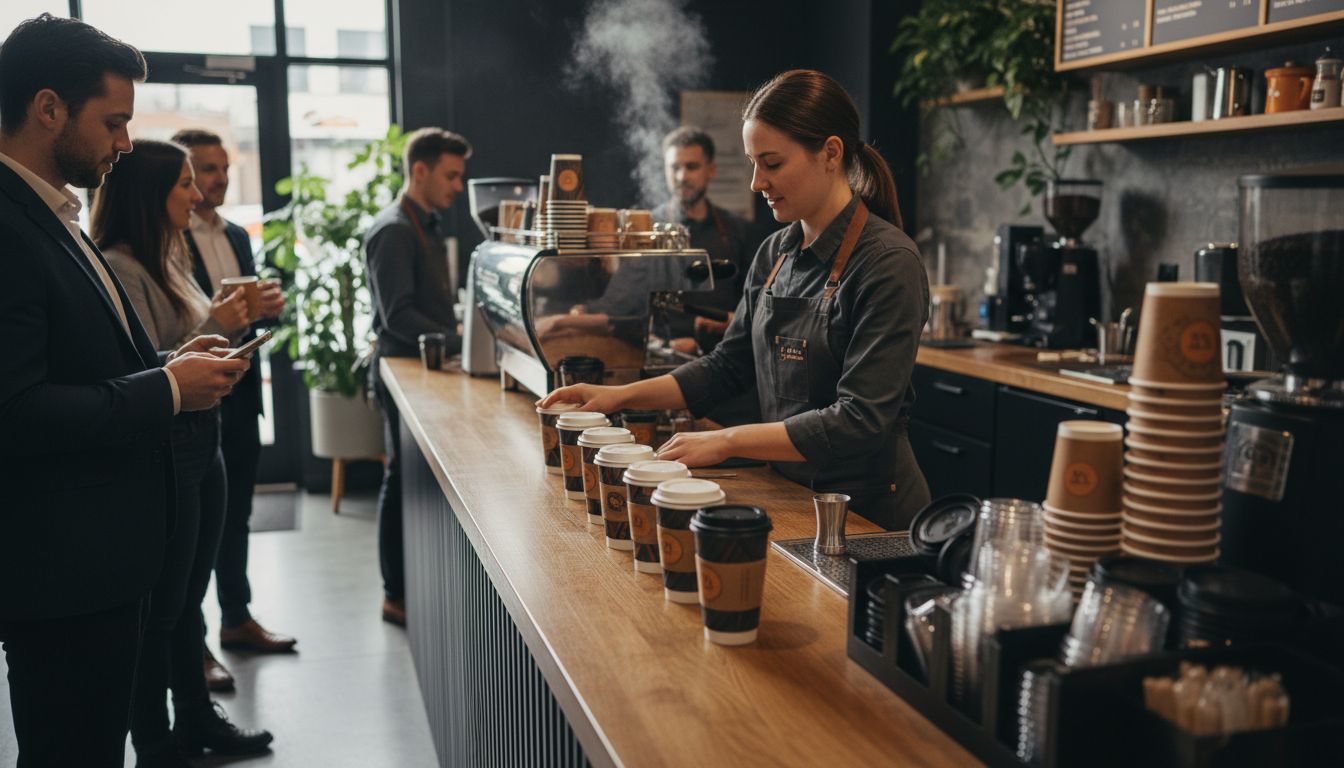
Coffee shops serve billions of takeaway cups each year worldwide, yet many owners struggle to choose the right size and material for their menus. The perfect coffee cup does more than hold a drink—it shapes customer experience, brand recognition, and even business profits. With so many sizes, materials, and customization options available, making the right decisions can set your café apart. Learn how to select and manage takeaway coffee cups that truly fit your business.
| Key Point | Explanation |
|---|---|
| 1. Assess your cup size needs | Identify beverage types to match appropriate cup sizes, enhancing service and customer satisfaction. |
| 2. Choose sustainable materials | Select eco-friendly cup materials that align with operational needs while minimizing environmental impact. |
| 3. Customize cups for branding | Design cups that represent your brand clearly, enhancing recognition and customer loyalty through visual marketing. |
| 4. Manage stock effectively | Track cup consumption to maintain optimal inventory levels and prevent waste, aiding in financial performance. |
| 5. Verify cup quality through tests | Conduct practical tests on cups to ensure they meet heat retention and durability standards for customer satisfaction. |
Selecting the right takeaway coffee cup size is crucial for matching your menu offerings and customer preferences. Understanding the variety of portion sizes will help you design a more effective beverage service strategy.
As highlighted by Wikipedia, coffee cup sizes typically range from 8oz (230ml) to 16oz (475ml), offering significant flexibility for different drink types. When assessing your menu needs, consider three primary factors: beverage type, customer demographics, and typical serving volumes. Espresso based drinks like cappuccinos and lattes might require smaller 8oz cups, while larger americanos or filter coffees could demand 12oz or 16oz options.
Start by mapping out your current drink menu and categorising each beverage by its standard serving size. This process helps identify potential gaps or opportunities in your current cup inventory. Consider conducting a quick customer survey or tracking sales data to understand which sizes are most popular among your clientele. A strategic mix might include small (8oz), medium (12oz), and large (16oz) cups to accommodate various preferences and drink styles.
Pro tip: Always purchase cups that provide a slightly larger capacity than your intended drink volume. This allows room for milk, foam, or ice without risking spillage or overflow.
Once you have analysed your menu requirements, you will be ready to select the most appropriate takeaway coffee cup sizes for your specific food service operation.
Choosing the right takeaway coffee cup materials involves balancing environmental responsibility with practical performance requirements. Your selection will impact both your operational efficiency and your brand’s ecological footprint.
According to Coffee Institute Base UK, the UK coffee industry is actively transitioning towards more sustainable packaging solutions. This means exploring materials like PLA-lined cups and fully compostable paper cups that reduce environmental impact while maintaining high functional standards. When evaluating materials, consider key performance attributes such as heat retention, structural integrity, moisture resistance, and overall durability.
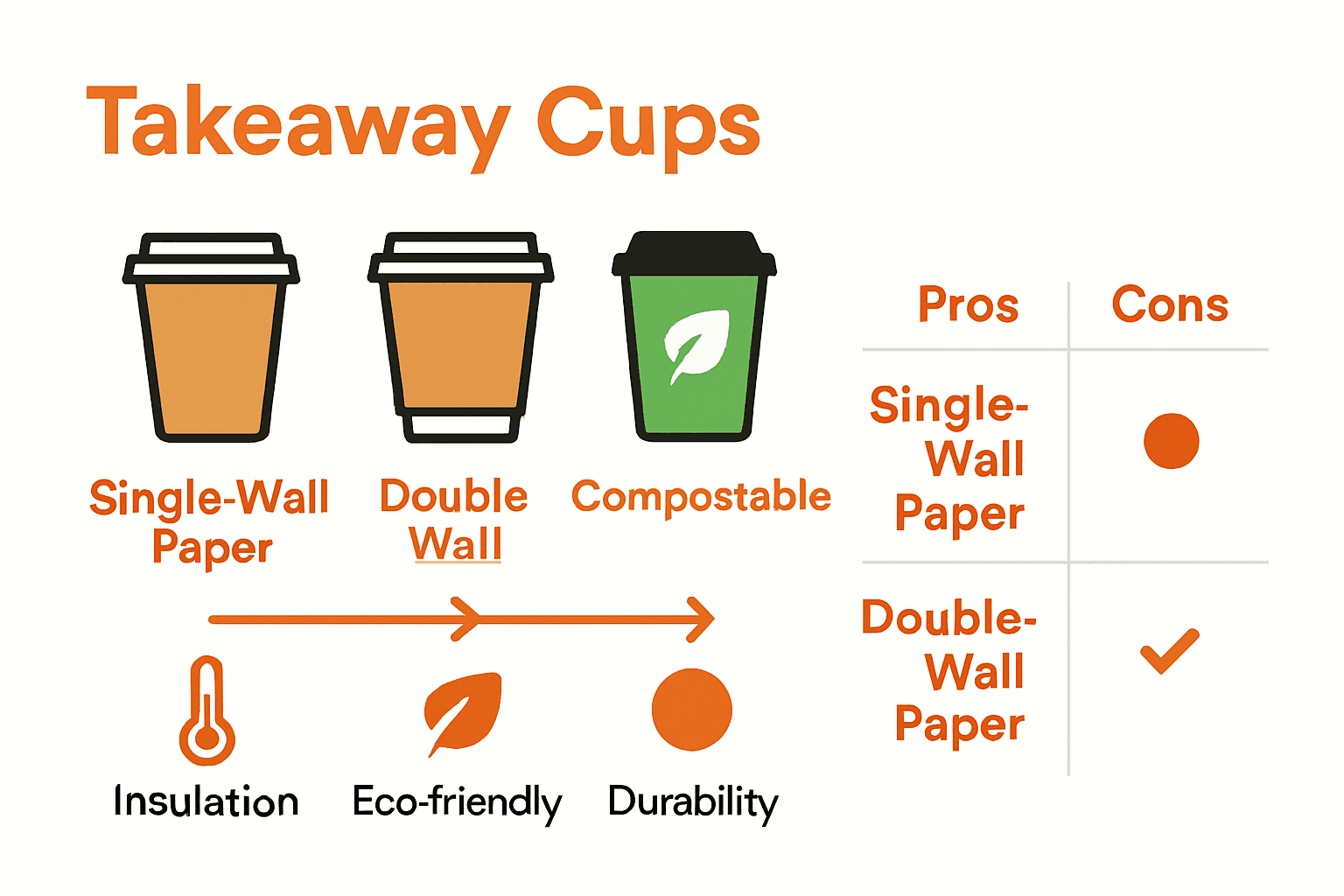
Evaluate different material options by testing their real world performance. Single wall paper cups might be cost effective but provide less insulation compared to double wall alternatives. Compostable materials often require specific disposal conditions to break down effectively. Look for certifications like EN13432 for compostability or FSC certification for responsible paper sourcing. Your goal is finding a material that meets both environmental standards and practical operational needs.
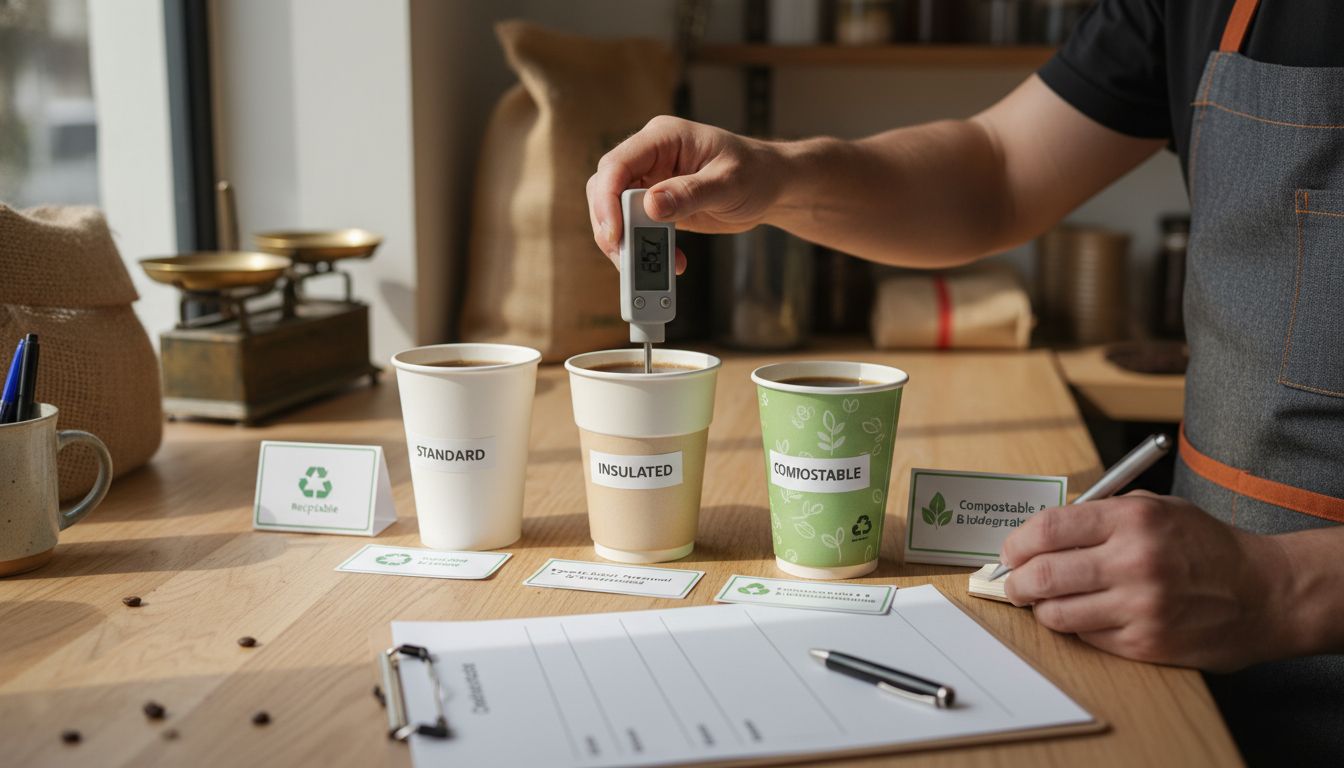
Pro tip: Request sample materials from suppliers and conduct thorough testing under actual service conditions before making a bulk purchasing decision. This approach helps prevent potential issues with cup performance or customer experience.
By carefully selecting sustainable materials that perform well, you will create a packaging strategy that supports both your business objectives and environmental responsibilities.
Branding your takeaway coffee cups transforms them from simple containers into powerful marketing tools that communicate your business identity and create memorable customer experiences. Your cup design is a critical touchpoint that can significantly enhance brand recognition and customer loyalty.
Start by exploring printed coffee cup options that allow for comprehensive customisation. Consider your brand colours, logo placement, and overall visual aesthetic when designing your cup graphics. Focus on creating a design that is clean, recognisable, and reflects your brand personality. Smaller businesses might start with simple logo placement, while more established brands could experiment with full colour wraps or intricate graphic designs.
Think strategically about your design elements. Your logo should be prominently displayed but not overwhelming. Select colours that align with your brand palette and ensure text remains legible from multiple angles. Consider adding a tagline or brand message that reinforces your unique value proposition. Remember that your cup design travels with customers beyond your immediate premises potentially attracting new clientele through indirect marketing.
Pro tip: Always request a physical proof or sample of your printed cups before committing to a full production run. Colours and design can look dramatically different in physical form compared to digital mockups.
By investing time in thoughtful cup customisation, you transform a simple packaging item into a dynamic branding opportunity that extends your marketing reach with every single serve.
Effective stock management for takeaway coffee cups is a delicate balance between maintaining sufficient inventory and avoiding unnecessary waste. Your ordering strategy directly impacts both operational efficiency and financial performance.
Develop a systematic approach to tracking your cup consumption by implementing a robust inventory management process. Start by calculating your average weekly usage across different cup sizes and styles. Factor in seasonal variations seasonal variations such as summer iced drink periods or winter holiday peaks. Consider creating a spreadsheet or using inventory management software to track precise usage patterns. Aim to maintain a stock level that provides a buffer of approximately two to three weeks worth of inventory without risking excessive storage costs or potential product expiration.
Prioritise suppliers who offer flexible ordering options and reasonable minimum order quantities. Look for vendors that provide volume discounts while allowing you to adjust order sizes based on your changing requirements. Some suppliers offer consignment stock arrangements or just in time delivery models that can help smaller businesses manage cash flow and storage constraints more effectively.
Pro tip: Always order a small percentage of mixed or alternative cup sizes to accommodate unexpected demand or special promotional events. Flexibility in your inventory can prevent potential service interruptions.
By implementing a strategic and data driven approach to stock management, you will create a reliable supply chain that supports consistent customer service and operational flexibility.
Ensuring the reliability and performance of your takeaway coffee cups requires a systematic approach to quality verification. Your goal is to validate that the cups meet both operational standards and customer expectations.
As highlighted by Expert Reviews, comprehensive cup quality assessment involves evaluating multiple critical factors including heat retention, leak proofing, and overall durability. Develop a structured testing protocol that examines key performance indicators. Begin with heat retention tests by filling cups with hot liquid and measuring temperature decline over 30 minutes. Check structural integrity by applying moderate pressure and monitoring for potential structural weaknesses. Assess leak resistance by filling cups and tilting them at various angles to simulate real world handling conditions.
According to Green Eco Friend, material quality plays a significant role in cup performance. Inspect cups for consistent wall thickness, smooth seam construction, and absence of manufacturing defects. Test different liquid temperatures to ensure the cup maintains its structural integrity without warping or compromising insulation properties. Pay special attention to rim quality, lid compatibility, and overall ergonomic design that supports comfortable handling.
Pro tip: Always conduct quality tests with a statistically significant sample size and document your findings systematically. This approach provides reliable insights into potential manufacturing variations.
By implementing rigorous quality verification processes, you will safeguard your brand reputation and ensure consistent customer satisfaction with every takeaway coffee cup.
Selecting the perfect takeaway coffee cup size and material can feel overwhelming when you want to delight every customer while managing costs and sustainability. This guide highlights key challenges such as matching cup sizes to your menu, ensuring cup quality, and creating unforgettable branded packaging. You want cups that maintain heat, avoid leaks and boost your brand at every service.
Discover how Grab n Go Packaging supports your food service success with a diverse range of takeaway coffee cups tailored to your specific needs. From small to large sizes, compostable options, and bespoke printed designs for stronger brand impact, our solutions are built to help you manage stock efficiently while impressing customers. Act now to secure packaging that matches your menu perfectly and elevates your coffee service to the next level.
Browse our full collection of takeaway coffee cups and explore flexible ordering options that suit your business today.
Start by categorizing each beverage on your menu by its standard serving size. Consider offering a mix of small (8oz), medium (12oz), and large (16oz) cups to accommodate various drink types and customer preferences.
Select materials that balance sustainability with performance, such as compostable paper or PLA-lined cups. Evaluate their heat retention, moisture resistance, and durability to ensure they meet your practical needs while minimizing environmental impact.
Explore options for printed coffee cups that allow for brand colors, logos, and taglines. Create a design that reflects your brand identity and is visually appealing to enhance recognition, ensuring your logo is prominent yet clean and recognizable.
Implement an inventory management system to track your cup consumption and maintain an optimal stock level. Aim for a buffer of two to three weeks’ worth of inventory while adjusting orders based on seasonal trends or special events to avoid waste.
Conduct practical tests assessing key factors like heat retention, leak resistance, and structural integrity. Perform systematic evaluations using a sample size to ensure consistent quality, monitoring for issues like warping or manufacturing defects.
Consider the types of beverages you plan to serve and your customer demographics when selecting cup sizes. A strategic mix of sizes will cater to espresso-based drinks that typically use 8oz cups and larger filter coffees that may need 12oz or 16oz options.