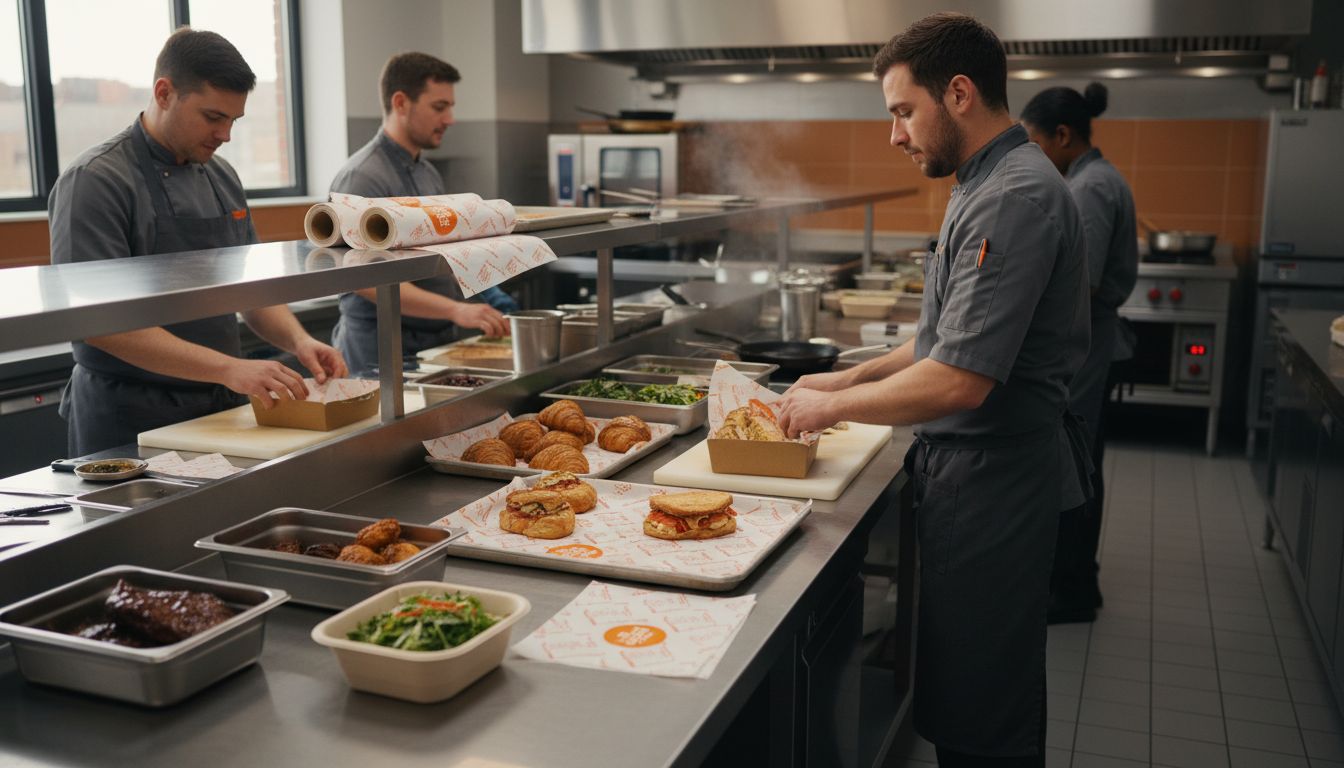
How to Use Greaseproof Papers for Food Businesses

{
"@type": "Article",
"author": {
"url": "https://grabngopackaging.co.uk/",
"name": "GrabngoPackaging",
"@type": "Organization"
},
"@context": "https://schema.org",
"headline": "How to Use Greaseproof Papers for Food Businesses",
"publisher": {
"url": "https://grabngopackaging.co.uk/",
"name": "GrabngoPackaging",
"@type": "Organization"
},
"inLanguage": "en",
"articleBody": "Learn how to use greaseproof papers with step-by-step guidance for food service businesses. Achieve perfect food presentation and reliable packaging every time.",
"description": "Learn how to use greaseproof papers with step-by-step guidance for food service businesses. Achieve perfect food presentation and reliable packaging every time.",
"datePublished": "2025-10-28T14:49:34.535Z"
}

Did you know that over 80 percent of food businesses in the UK rely on greaseproof paper to protect their products and meet strict hygiene standards? The right packaging makes a difference for both your food’s quality and your brand’s reputation. Learning how to select and use the best greaseproof papers helps you maintain freshness, ensure food safety, and impress customers with professional presentation.

Table of Contents

Quick Summary

Key Point Explanation
1. Choose food-safe greaseproof papers Ensure selected papers meet UK regulations to avoid harmful substances in food packaging.
2. Assess food type for grease resistance Select papers based on food grease levels; oily foods need higher resistance ratings.
3. Maintain hygienic workstations Keep preparation areas clean and sanitised to prevent foodborne illnesses.
4. Perfect wrapping techniques Wrap food tightly without compression to maintain quality and presentation.
5. Conduct regular quality checks Systematically inspect each wrapped item for hygiene and presentation consistency.

Step 1: Select the Right Greaseproof Papers

Choosing the perfect greaseproof paper is crucial for protecting your food products and maintaining professional standards in your business. In this guide, you will learn how to select greaseproof papers that meet safety requirements and suit your specific food packaging needs.

When selecting greaseproof papers, your primary focus should be on food safety and material compatibility. According to UK food safety regulations, all materials coming into contact with food must not transfer harmful substances or alter the food’s composition. This means you need papers specifically designed for food packaging.

Start by assessing the type of food you will be wrapping. Oily foods like chips, pastries, and sandwiches require higher grease resistance compared to drier items. Look for papers that have a specific grease resistance rating. A higher rating indicates better performance in preventing oil and fat seepage.

Consider the size and shape of your packaging. Bespoke Greaseproof Paper options allow you to customize dimensions to fit your specific product requirements. Measure your typical food items and choose papers that provide complete coverage without unnecessary waste.

Pro Tip: Always purchase greaseproof papers from reputable suppliers who can provide food safety certifications and comply with UK packaging standards.

Texture and finish are equally important. Smooth papers work well for wrapping, while slightly textured options provide better grip for items that might slide around. Some businesses prefer papers with a natural or branded print to enhance their packaging aesthetics.

Finally, consider your sustainability goals. Many modern greaseproof papers come in environmentally friendly options that are biodegradable or made from recycled materials. This can be an excellent selling point for environmentally conscious customers.

Here’s a comparison of key factors when selecting greaseproof papers:

Factor Key Considerations Example Options
Grease Resistance High for oily foods
Standard for dry
Chips
Sandwiches
Pastries
Size & Customisation Fits product fully
Minimal waste
Bespoke sheets
Pre-cut squares
Texture & Finish Smooth for neat wrapping
Textured for grip
Natural look
Branded print
Food Safety Certified for food use
Non-toxic
UK/EU compliant
Tested material
Sustainability Biodegradable
Recycled content
Eco-friendly papers

In the next step, you will learn about proper storage and handling of your selected greaseproof papers to maintain their quality and effectiveness.

Step 2: Prepare Workstations and Storage Areas

Preparing your workstations and storage areas is a critical step in maintaining food safety and ensuring efficient greaseproof paper handling. This section will guide you through creating a clean professional environment that meets UK food hygiene standards.

According to UK food safety regulations, businesses are responsible for maintaining hygienic premises to prevent potential foodborne illnesses. Start by thoroughly cleaning and sanitising all surfaces where you will be handling and storing greaseproof papers. This includes countertops preparation areas and storage shelves.

Designate a specific area for greaseproof paper storage that is away from direct heat sources moisture and potential contamination. Ideal storage conditions include a cool dry space with consistent temperature and minimal exposure to sunlight. This helps preserve the paper quality and prevents potential degradation.

Greaseproof Paper Bag 12″ x 12″ storage requires careful handling. Use clean hands or gloves when managing papers to prevent introducing oils dirt or bacteria. Consider using sealed plastic containers or original packaging to protect papers from humidity and dust.

Pro Tip: Implement a first in first out system to ensure you use older stock before newer batches preventing potential paper degradation.

Create a dedicated workspace with sufficient lighting and clean working surfaces. Ensure your area has good ventilation and is separate from raw food preparation zones to minimise cross contamination risks. Use separate clean utensils and tools specifically for paper handling.

food workstation hygiene

Regularly audit your storage and preparation areas. Conduct weekly checks to ensure cleanliness organisational standards and paper quality. This proactive approach helps maintain food safety compliance and operational efficiency.

In the next step you will learn about the proper techniques for cutting and handling greaseproof papers to maintain their integrity and professional appearance.

Step 3: Wrap and Line Food Items Effectively

Wrapping and lining food items with greaseproof paper is a critical skill that ensures both food safety and visual appeal in your business. This step will teach you professional techniques for protecting and presenting your food products with precision and care.

According to UK food safety regulations, proper wrapping helps maintain food quality and protect against contamination. Begin by selecting the right size of greaseproof paper for your specific food items. Measure the item first and choose a paper size that provides complete coverage with minimal excess.

For flat items like sandwiches and pastries, lay the greaseproof paper flat and place the food item in the centre. Fold the edges carefully creating neat corners that completely encase the food. The goal is a tight but not compressed wrapping that prevents oil seepage and maintains food presentation.

Lining food containers requires similar attention to detail. Shop our packaging options to find containers that complement your greaseproof paper technique. When lining a container ensure the paper sits smoothly without wrinkles and covers the entire base and sides.

Pro Tip: Always handle food with clean gloves and use smooth gentle movements to prevent tearing the greaseproof paper during wrapping.

Different food types require specific wrapping approaches. Oily foods need more robust greaseproof papers with higher resistance. Delicate baked goods require lighter touch and more precise folding techniques. Practice and observe how different foods interact with your chosen paper.

Consider the visual presentation alongside functionality. Crisp clean folds and smooth paper coverage can significantly enhance the perceived quality of your food offering. Take time to perfect your technique and create a professional finish that impresses customers.

In the next step you will learn about storing and transporting your wrapped food items to maintain their quality and presentation.

Step 4: Secure Packaging for Transport or Display

Securing your food packaging for transport and display is crucial to maintaining food quality and safety throughout your business operations. This step will guide you through professional techniques that protect your products and preserve their integrity.

According to UK food safety regulations, packaging must prevent contamination and maintain product quality during transportation and display. Start by selecting containers that provide complete protection. When choosing packaging consider factors like temperature stability seal quality and structural integrity.

For hot or cold foods use containers with secure locking mechanisms. Explore our sustainable packaging options to find solutions that balance protection and environmental responsibility. Ensure your greaseproof paper lining remains intact during movement by using containers with snug fits.

Transport requires additional precautions. Stack items carefully avoiding pressure that might crush delicate foods. Use dividers or separate compartments to prevent items from shifting during movement. For delivery services choose packaging that maintains temperature and prevents spillage.

Pro Tip: Always test your packaging by gently simulating transport conditions to identify potential weakness in your wrapping or container selection.

Display presentation demands equal attention. Arrange items so greaseproof paper remains visible highlighting your commitment to quality and hygiene. Position foods to showcase their best attributes while maintaining food safety standards. Consider using clear containers that allow customers to see your carefully wrapped products.

Temperature management is critical. Different foods require specific storage conditions. Hot foods need insulated packaging that retains heat while preventing condensation. Cold items demand packaging that maintains low temperatures and prevents bacterial growth.

In the final step you will learn about maintaining overall food safety and quality throughout your packaging process.

Step 5: Verify Presentation and Maintain Hygiene

Verifying food presentation and maintaining rigorous hygiene standards are critical final steps in your greaseproof paper packaging process. This section will guide you through professional techniques to ensure your food looks appealing and remains safe for consumption.

According to UK food safety regulations, food businesses must consistently monitor and uphold hygiene practices that meet quality and safety standards. Begin by conducting a systematic visual inspection of each wrapped item. Check that your greaseproof paper wrapping remains intact clean and properly positioned.

Presentation goes beyond mere appearance. Small Printed Fish & Chips Box users understand that visual appeal directly impacts customer perception. Examine each package for crisp folds smooth paper coverage and absence of tears or contamination signs.

Implement a quick quality check routine. Verify that greaseproof paper edges are neatly tucked temperature sensitive foods maintain appropriate conditions and no oil or moisture has compromised the packaging. Look for consistent wrapping techniques across all food items.

Pro Tip: Develop a standardised inspection checklist to ensure every team member follows the same high quality presentation standards.

Hygiene involves more than visual assessment. Regularly sanitise your workstations replace greaseproof paper frequently and train staff on proper handling techniques. Create a culture of cleanliness where each team member understands their role in maintaining food safety.

Document your quality control processes. Keep records of inspections cleaning schedules and any corrective actions. This documentation demonstrates your commitment to food safety and can be valuable during health inspections.

Your greaseproof paper packaging journey is complete when you consistently deliver safe beautifully presented food products that meet the highest professional standards.

Elevate Your Food Packaging with Expert-Grade Greaseproof Papers

Choosing and using the right greaseproof papers can feel overwhelming when you want to keep your food fresh, safe, and visually appealing. This article highlights challenges like finding certified paper with high grease resistance, ensuring hygienic storage, perfect wrapping techniques, and securing packaging for transport—all essential for maintaining your professional standards and satisfying customers.

You need trusted suppliers who offer a wide range of packaging solutions tailored to your unique food business needs. At Grab n Go Packaging, we provide bespoke greaseproof papers alongside essential accessories like Greaseproof Paper Bags 12″ x 12″ and even stylish containers such as our Small Printed Fish & Chips Box. These options balance food safety, sustainability, and presentation perfectly.

https://grabngopackaging.co.uk

Don’t let packaging hold back your business growth or compromise on quality. Explore our comprehensive selection today at Grab n Go Packaging and take the next step towards flawless food wrapping and secure transport. Act now to benefit from personalised advice and competitive pricing that supports your success in the competitive food industry.

Frequently Asked Questions

How do I choose the right greaseproof paper for different food types?

Selecting the right greaseproof paper depends on the grease resistance needed for your food items. For oily foods like pastries or chips, choose papers with a high grease resistance rating to prevent seepage.

What are the proper storage conditions for greaseproof papers?

Store greaseproof papers in a cool, dry area away from direct heat and moisture to maintain their quality. Use sealed containers to protect them from humidity and dust, ensuring they stay safe for food packaging.

How can I effectively wrap food items with greaseproof paper?

To wrap food, select a paper size that fully covers your item. For flat foods, place the item in the center, fold the edges neatly, and ensure the wrapping is tight to prevent oil from seeping out while maintaining presentation.

What techniques should I use to secure packaging for transport?

Use containers that provide a snug fit to keep greaseproof paper lining intact during transport. When stacking items, avoid pressure that could crush delicate foods, and consider using dividers to prevent shifting.

How can I maintain hygiene while handling greaseproof papers?

Maintain hygiene by cleaning and sanitising your workstations regularly and handling papers with clean gloves to avoid contamination. Implement a routine that includes frequent checks of paper quality and cleanliness before use.

What steps should I take to verify food presentation before serving?

Conduct a visual inspection of each wrapped item to ensure the greaseproof paper is intact and properly positioned. Look for neat folds and absence of tears, aiming for a professional finish that enhances the visual appeal of your food offerings.

Article generated by BabyLoveGrowth

Verified by MonsterInsights